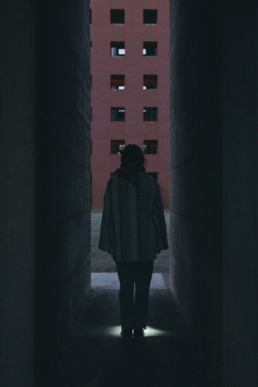
Aziza Gorgi & Emily Sarsam – Shaping Narratives – Periferico Festival, Modena (2025)
Curatorial
AZIZA GORGI & EMILY SARSAM – SHAPING NARRATIVES: UNBURYING ECHOES
Performance, October 2025, Periferico Festival, Modena
Shaping Narratives is a multisensory performance that traverses real and imagined funerary rituals across space and time. Criss-crossing between Tunisia and Modena, the work invites audiences to engage through scent, taste, sound, memory, and collective acts of grief and commemoration.
Developed through a series of physical and virtual encounters with archaeologists in Modena, the performance takes as its starting point the shared culinary traditions of North Africa and Northern Italy. These exchanges unfolded into speculative explorations of funerary practices within Etruscan and Roman tombs, offering a context through which to examine the transformation, survival, and reimagining of ritual across geographies and histories.
Through this work, the artists reflect on archaeology as both a scientific and speculative discipline, one that continuously reorders historical narratives through fragmented discoveries. With sensory ceramic and glass vessels, the artists explore taste as a medium of remembrance and connection. The performance interrogates how power, memory, and cultural dominance are shaped and perpetuated through the act of excavation and interpretation of artefacts.
Central to Shaping Narratives is a collaboration with a local ensemble of singers, who co-create and perform the live vocal score. Curator Salma Kossemtini worked closely on the research and creation process, as well as Collettivo Amigdala, who put the artists in touch with archaeologists working with the Museo Civico in Modena.
Artists: Aziza Gorgi, Emily Sarsam
Curators: Salma Kossemtini (co-curation), Collettivo Amigdala
Emily Sarsam is an interdisciplinary artist, researcher, and cultural organizer based between Tunis and Vienna. Working with mediums such as composition, voice, fiction and poetry, performance, and publishing, her work mainly revolves around commoning practices in rural and agricultural contexts, as well as the impacts of colonialism and extractivism on food, farming and local cosmologies.
Aziza Gorgi is an interdisciplinary artist. She creates sculptures, prints, tiles and choreography. Her themes range from popular culture to local applications of modernity, colonialism and tradition. Through performances and installations, she explores new forms of familiarity.
Together, they are the co-founders of Broudou, a publication and learning community devoted to creative research and experimentation around ecology, agriculture, and food.
With thanks to Laura Petrucci, Veronica Tarpani, Federica Rocchi, Matteo Torsani, Serena Terranova, Alessia Pelillo (Modena Civic Museum, head of communication and European projects), Federica Maria Riso (archaeologist), Ilaria Pulini, the Novi Ark excavation, Luciano and Mirco Pallotti, Silvia Pellegrini (archaeologist, Modena Civic Museum), Ahmed Ben Nessib and the participants of the choir.
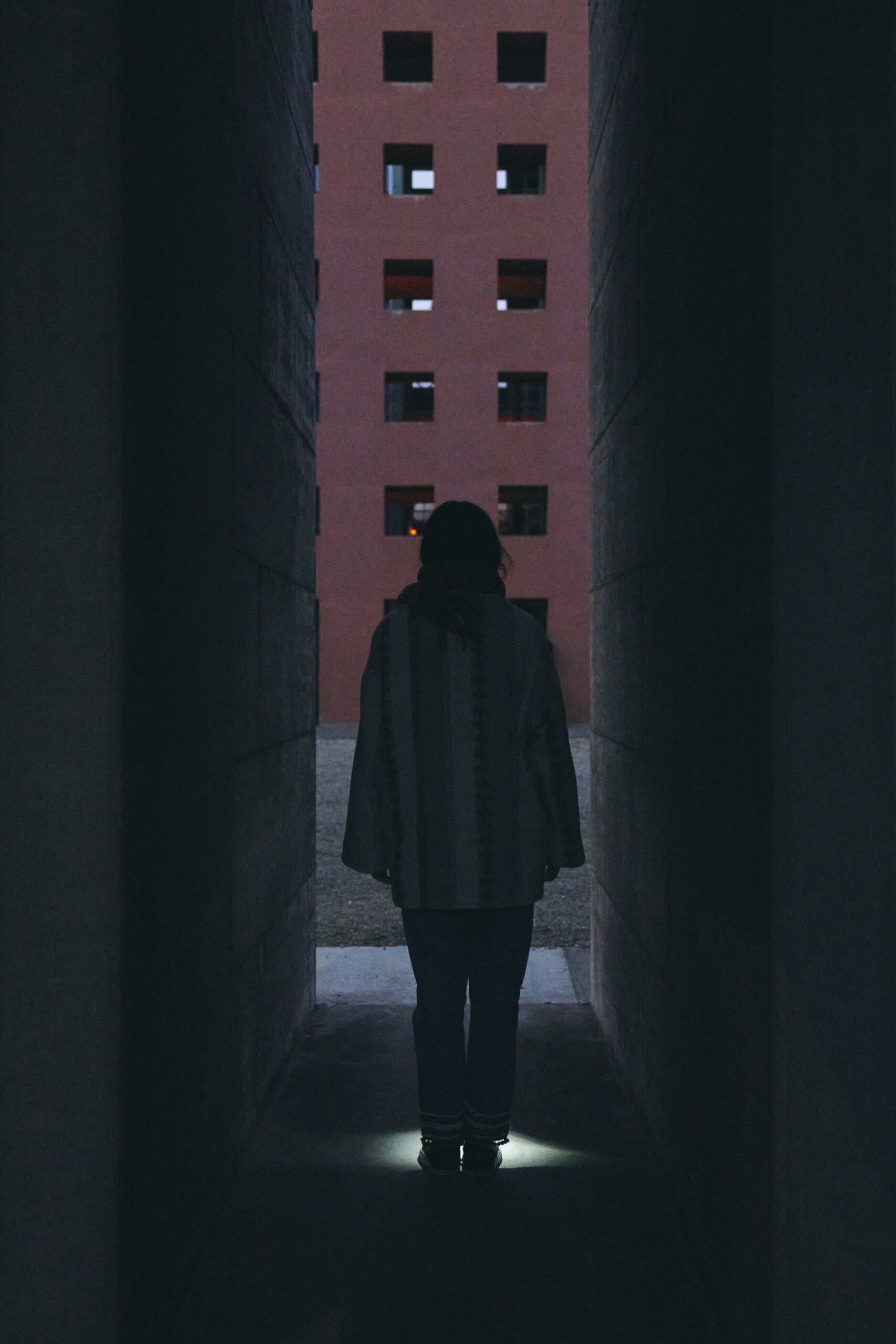
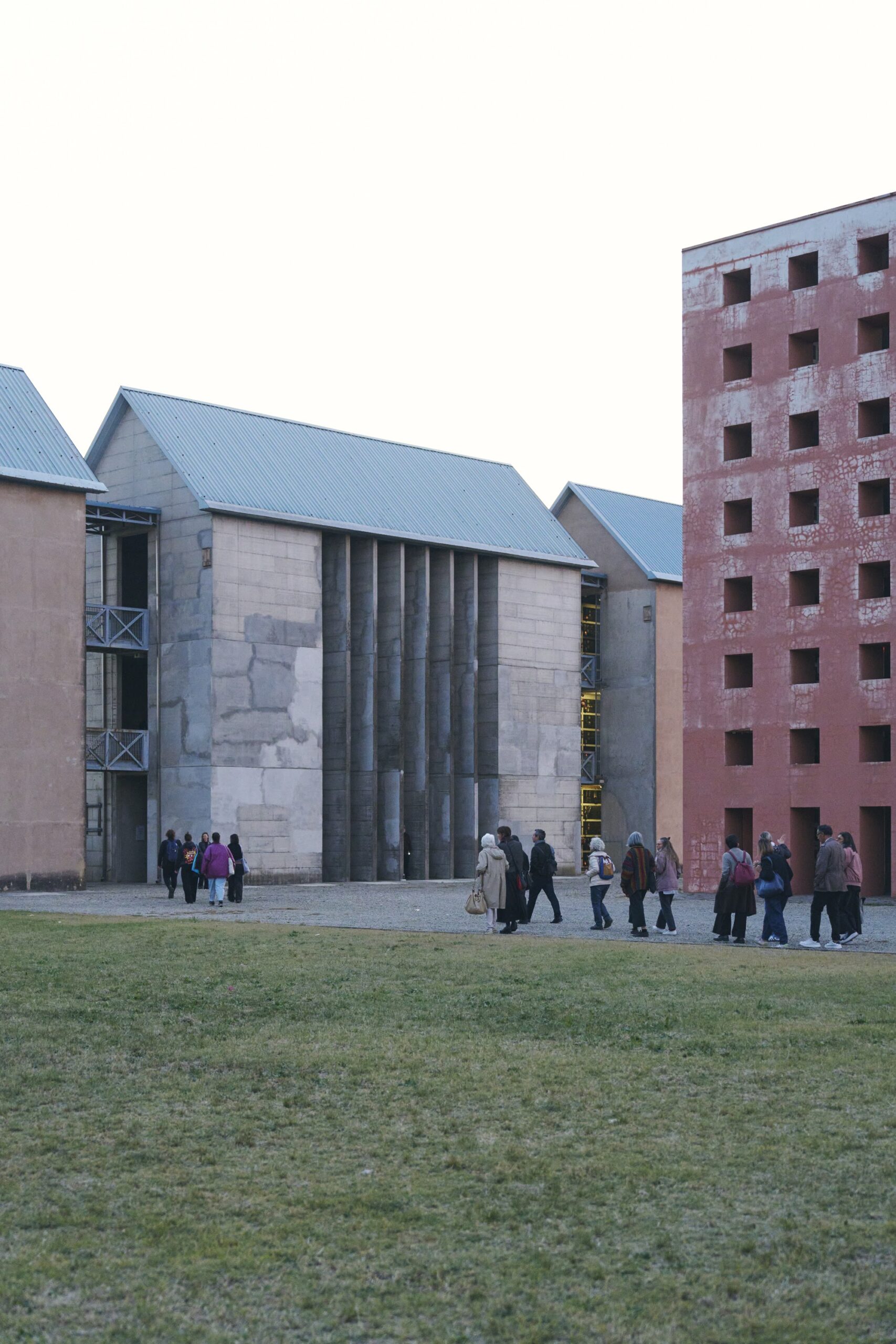
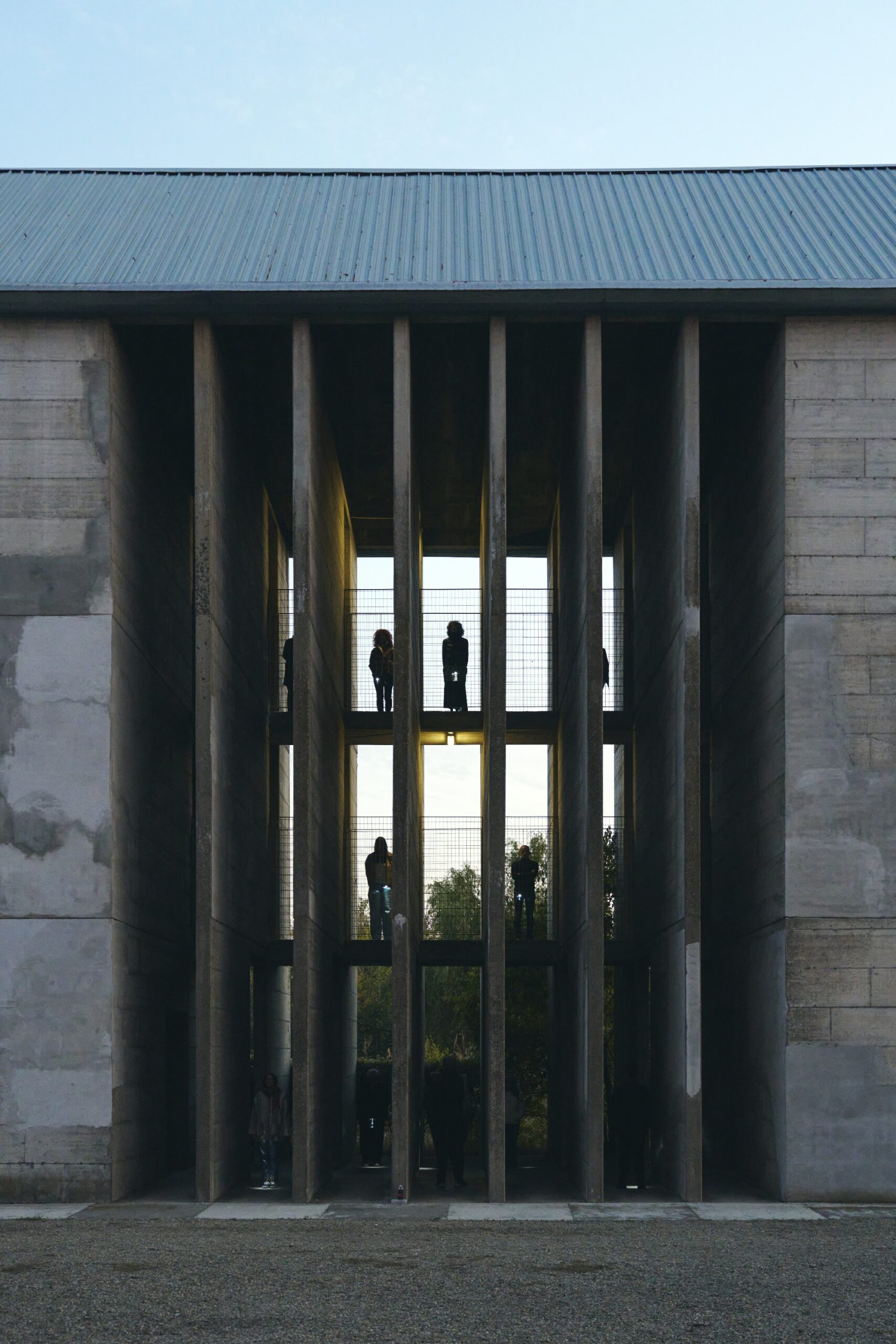
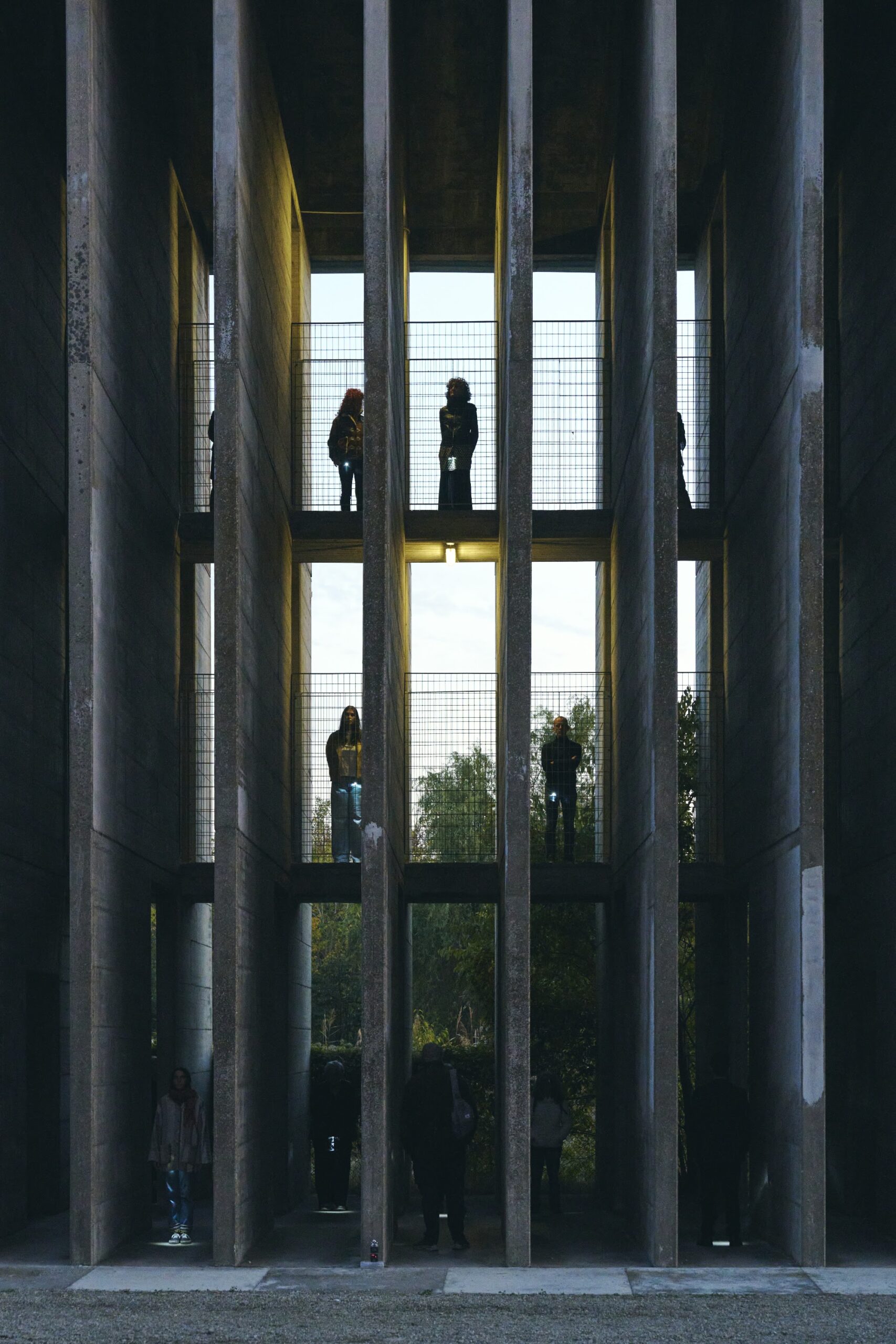
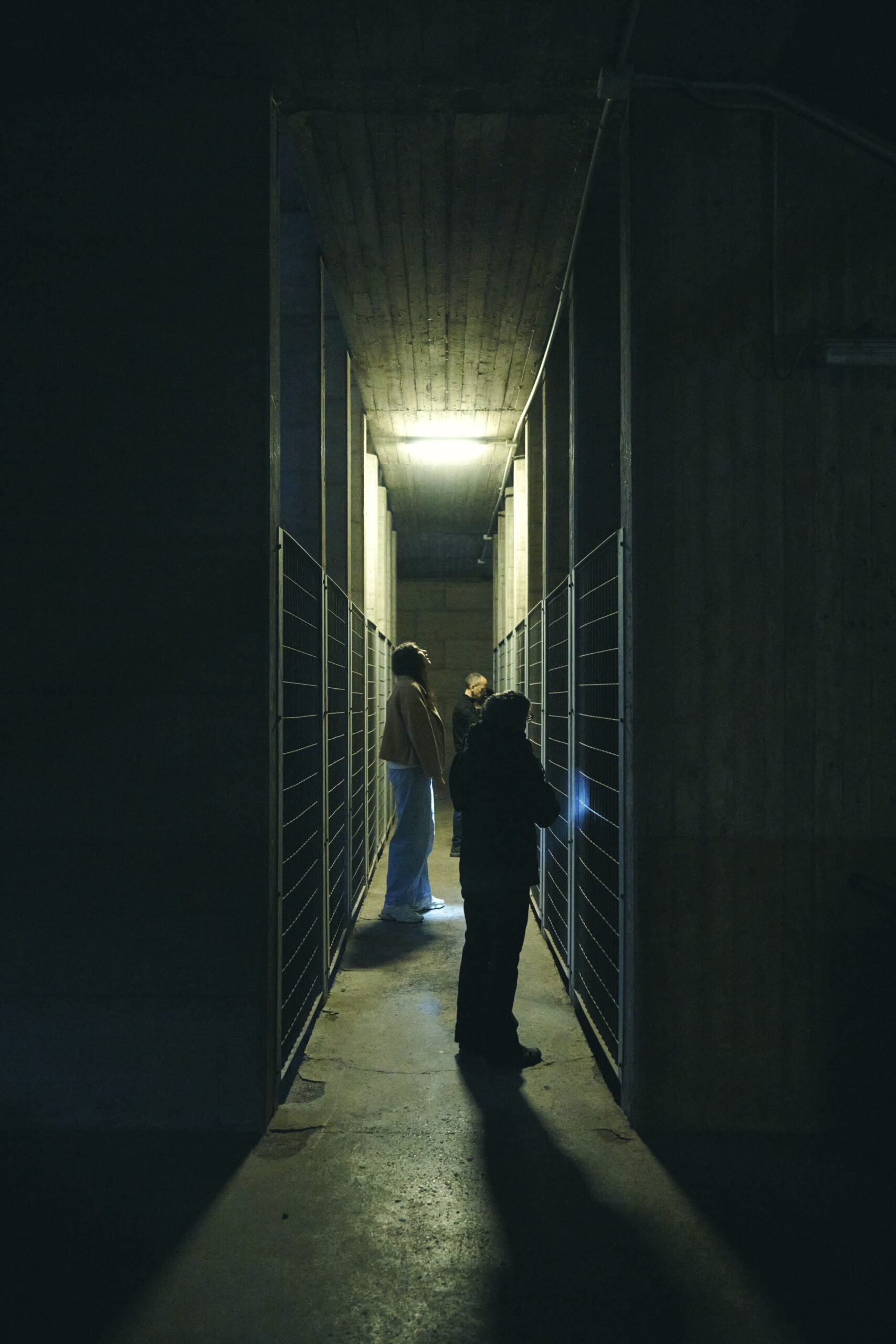
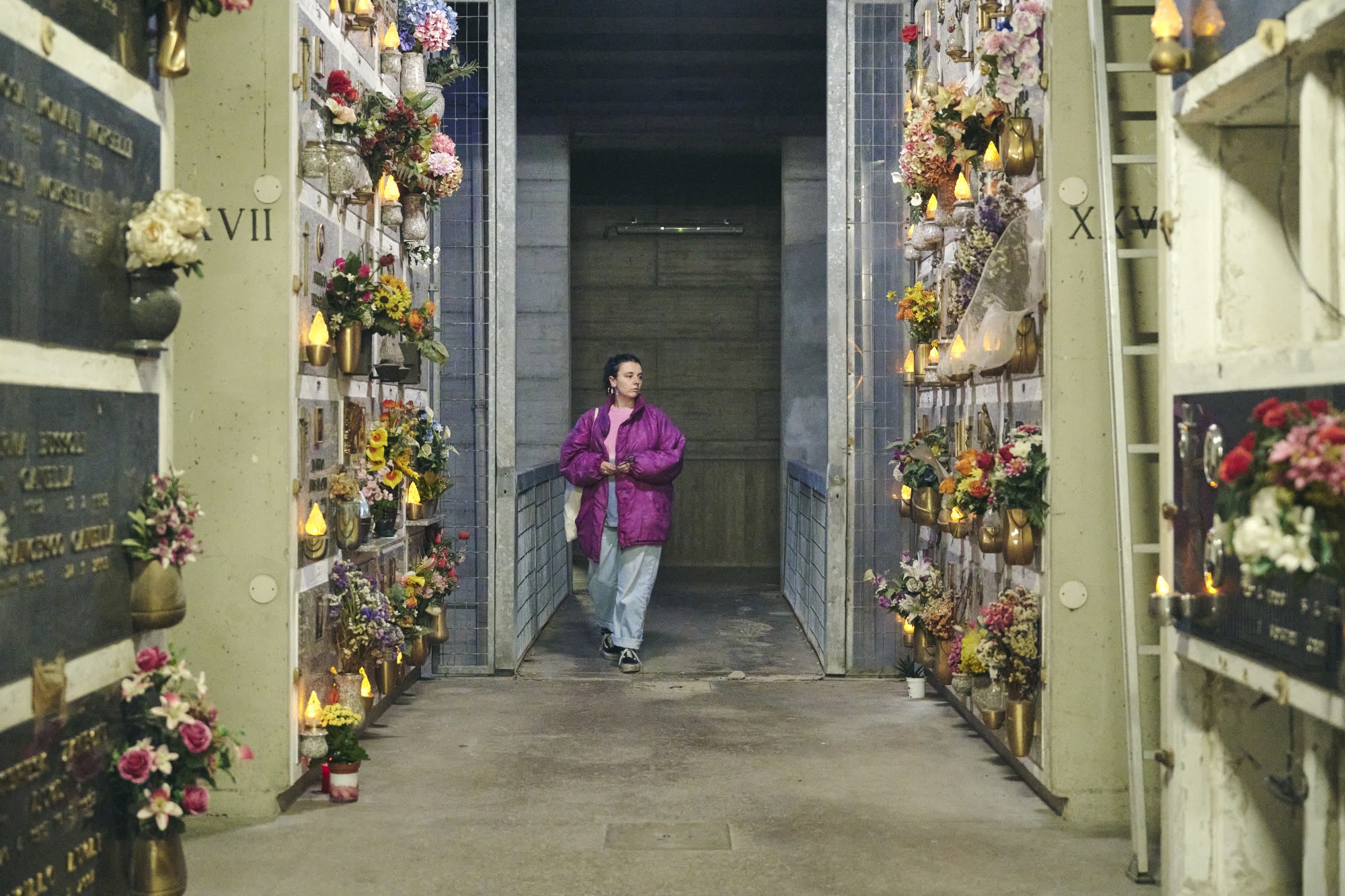
Photos: Davide Piferi De Simoni

Haptic Library – Dak’Art Biennale, Dakar (2024)
Curatorial
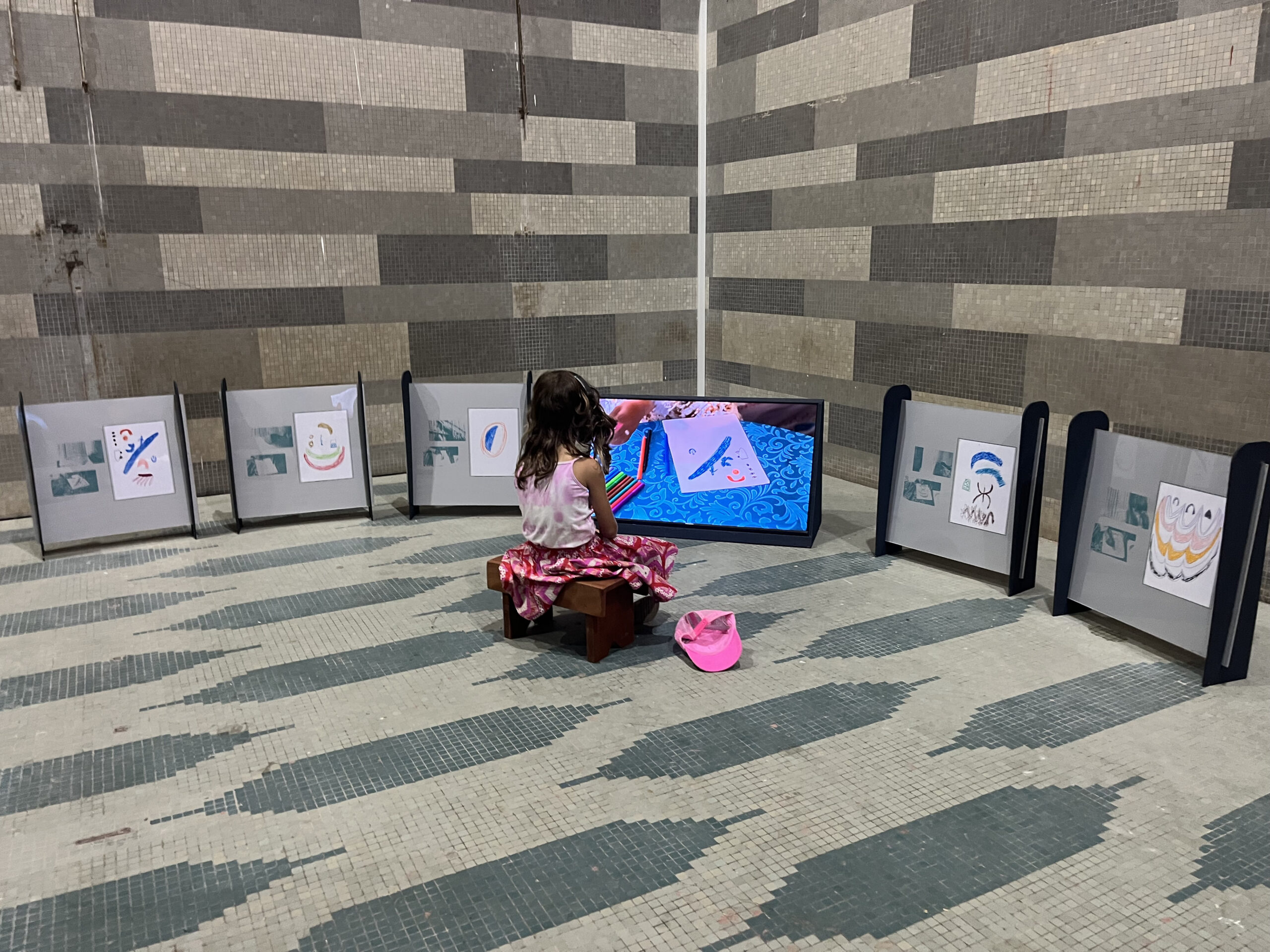
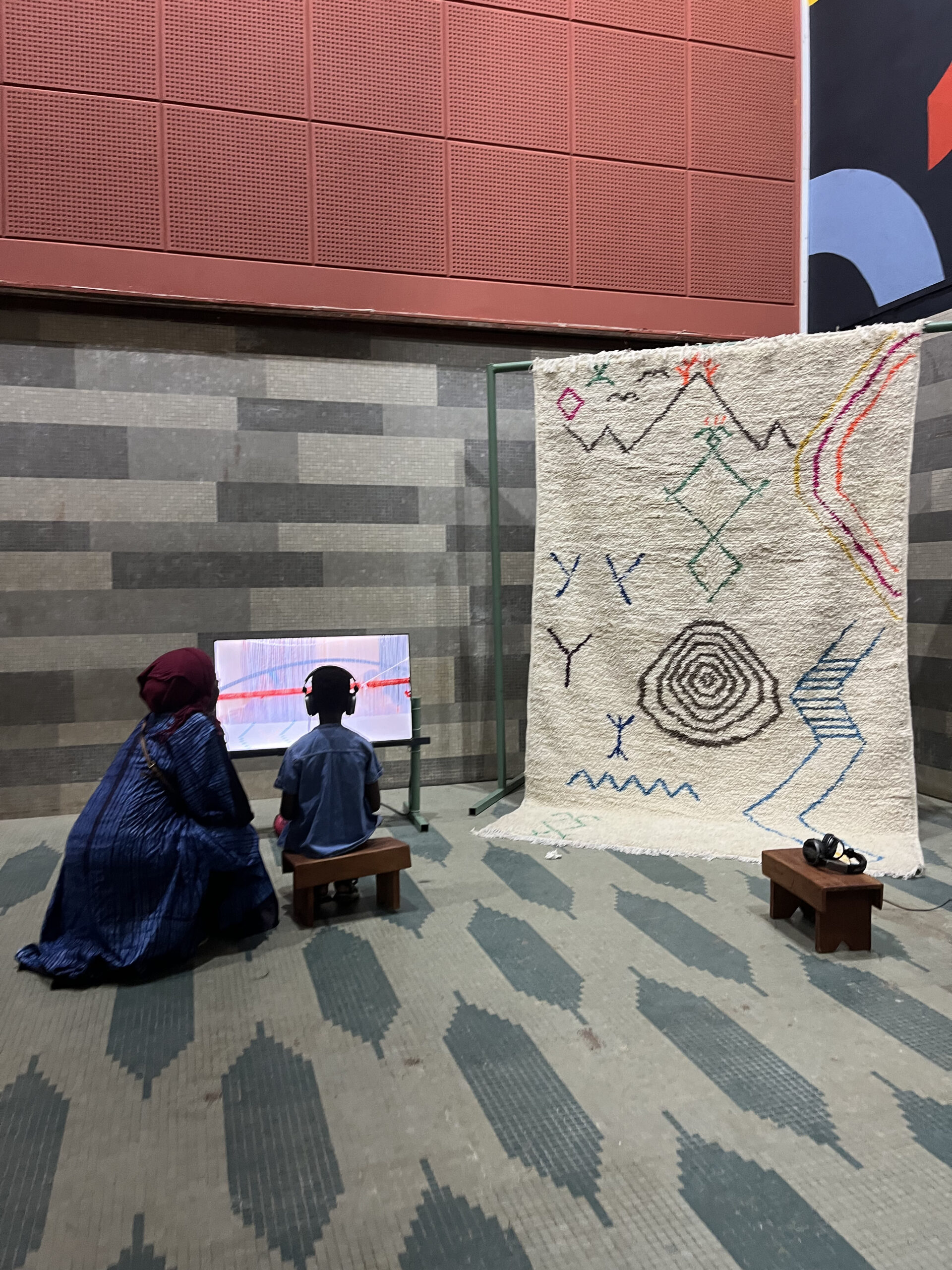
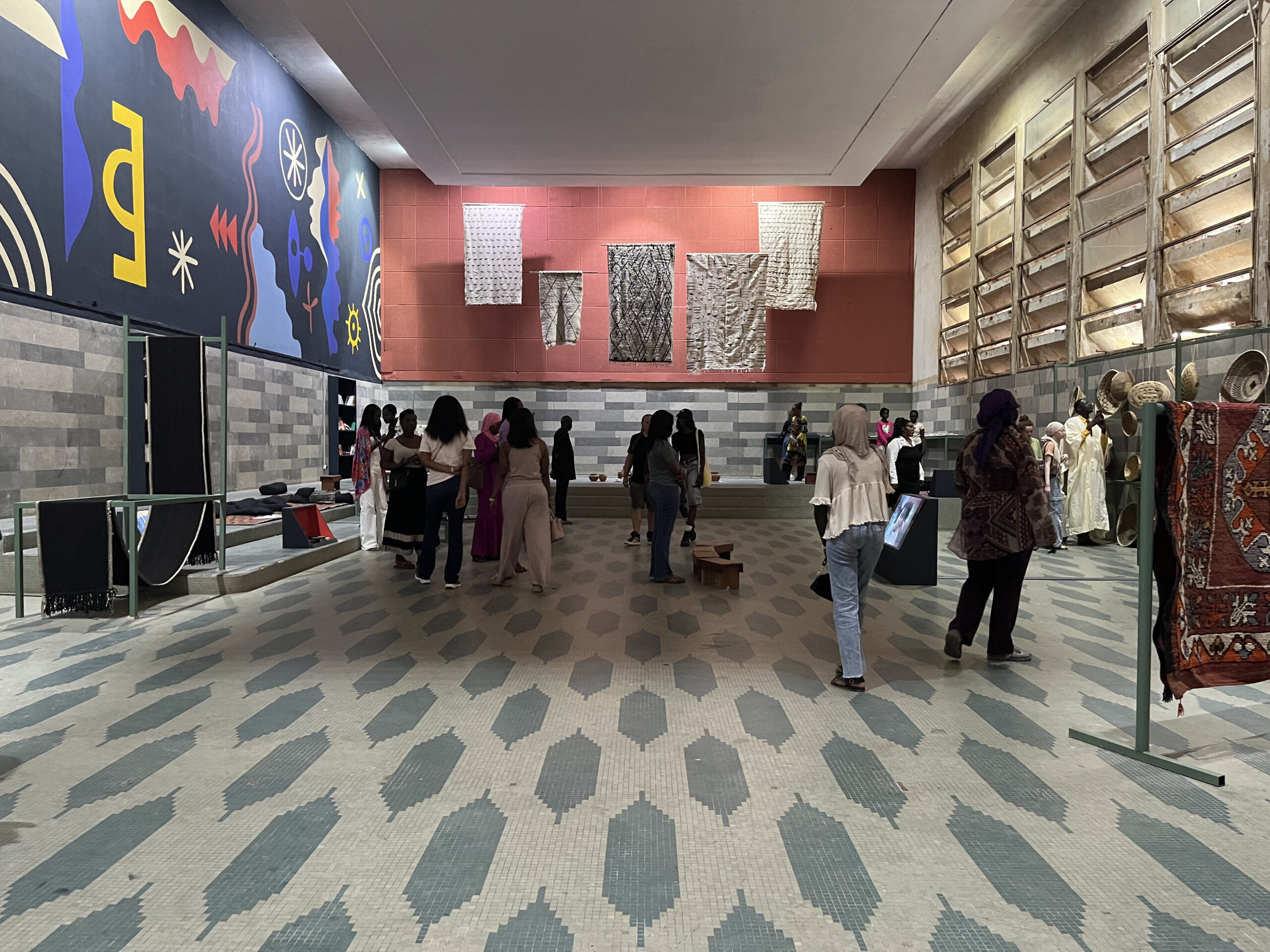
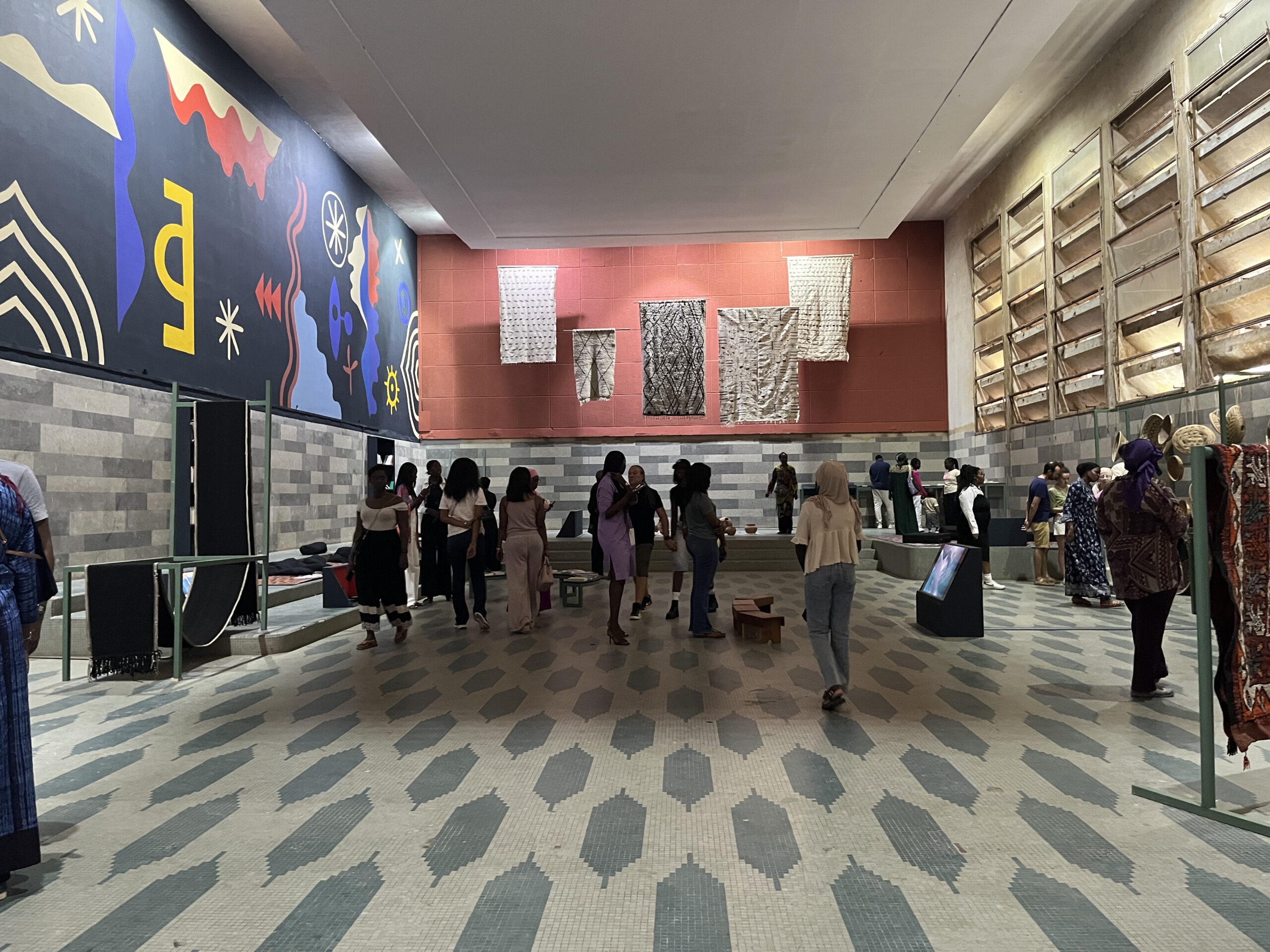
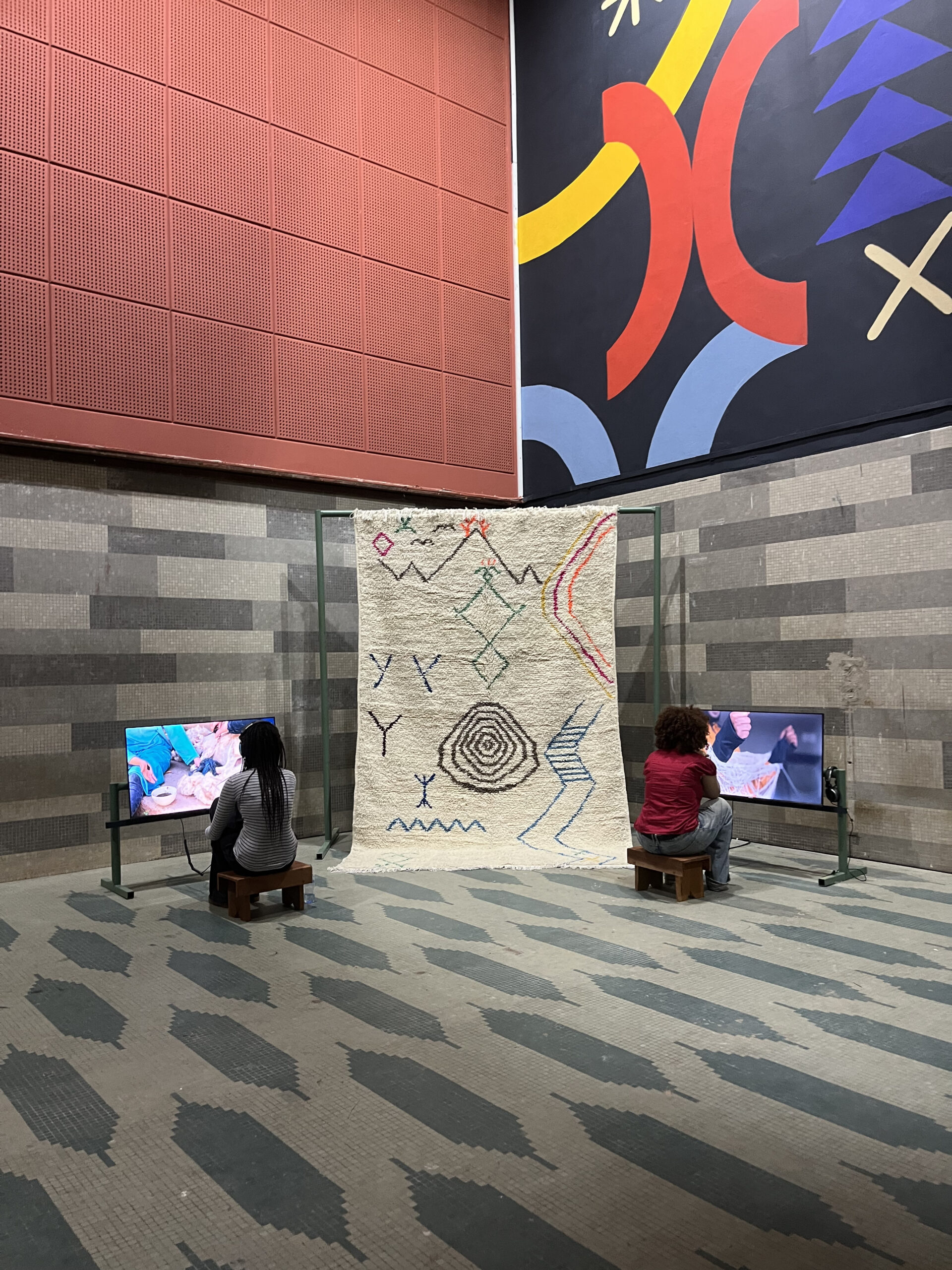
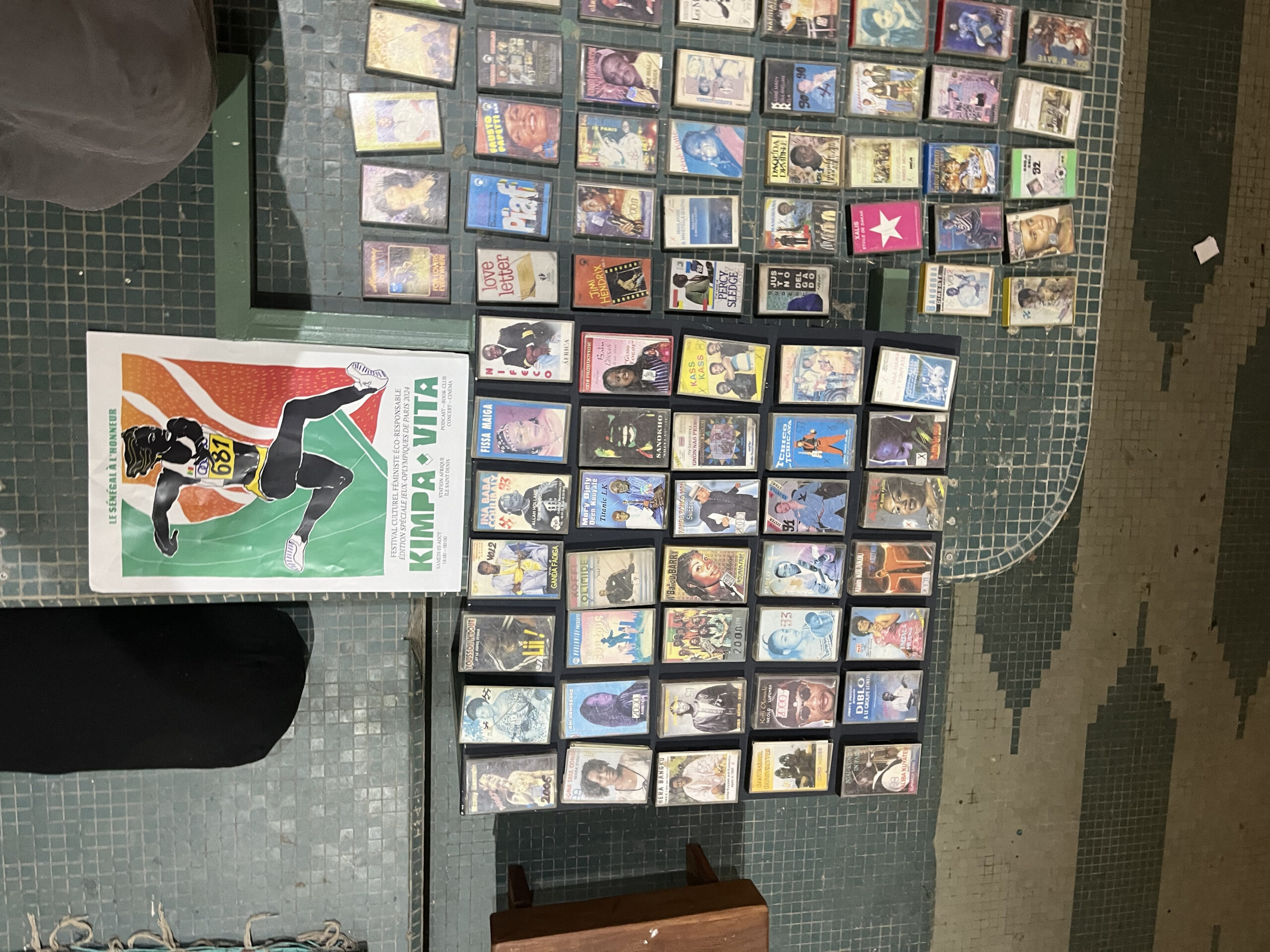
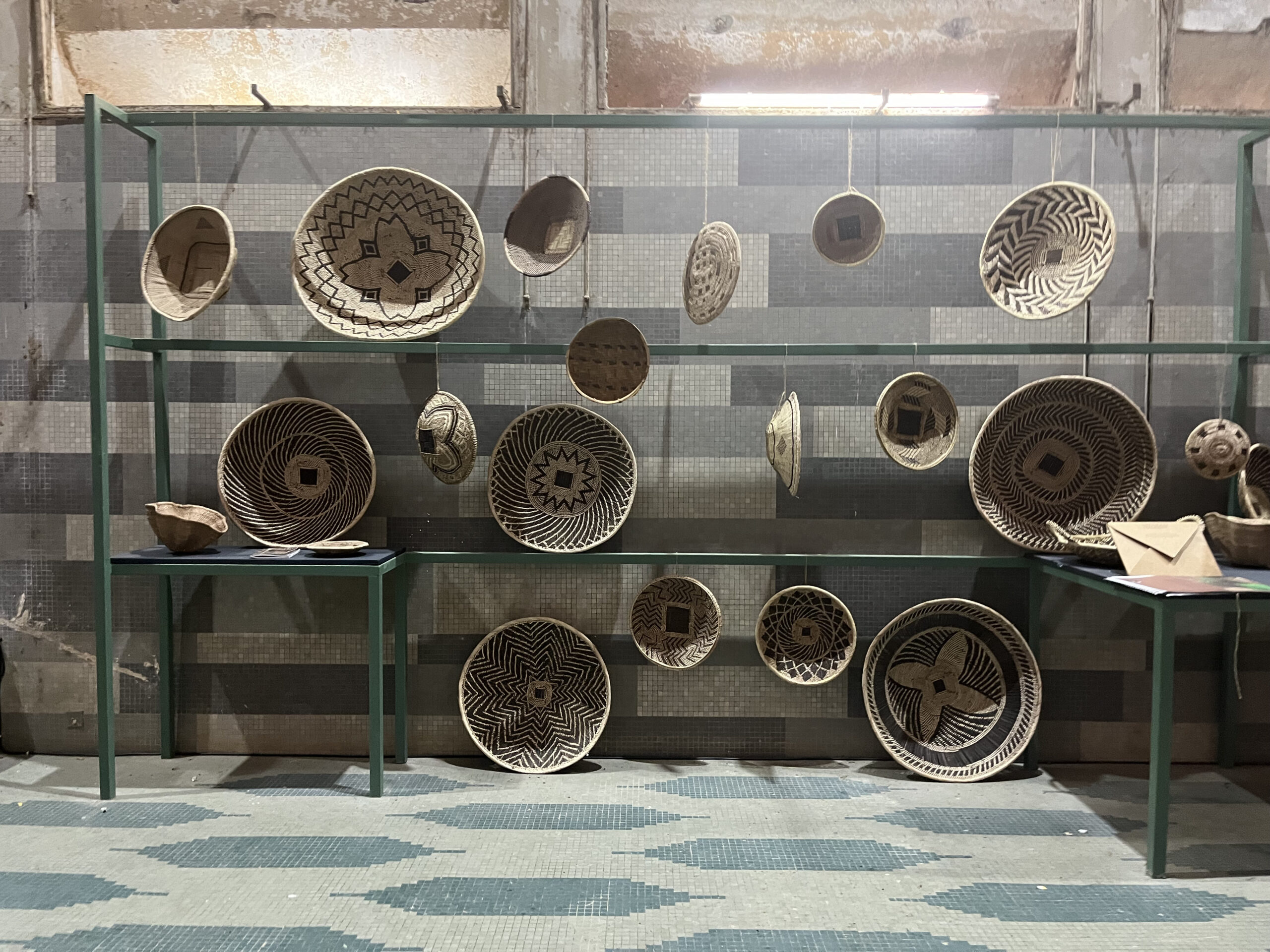
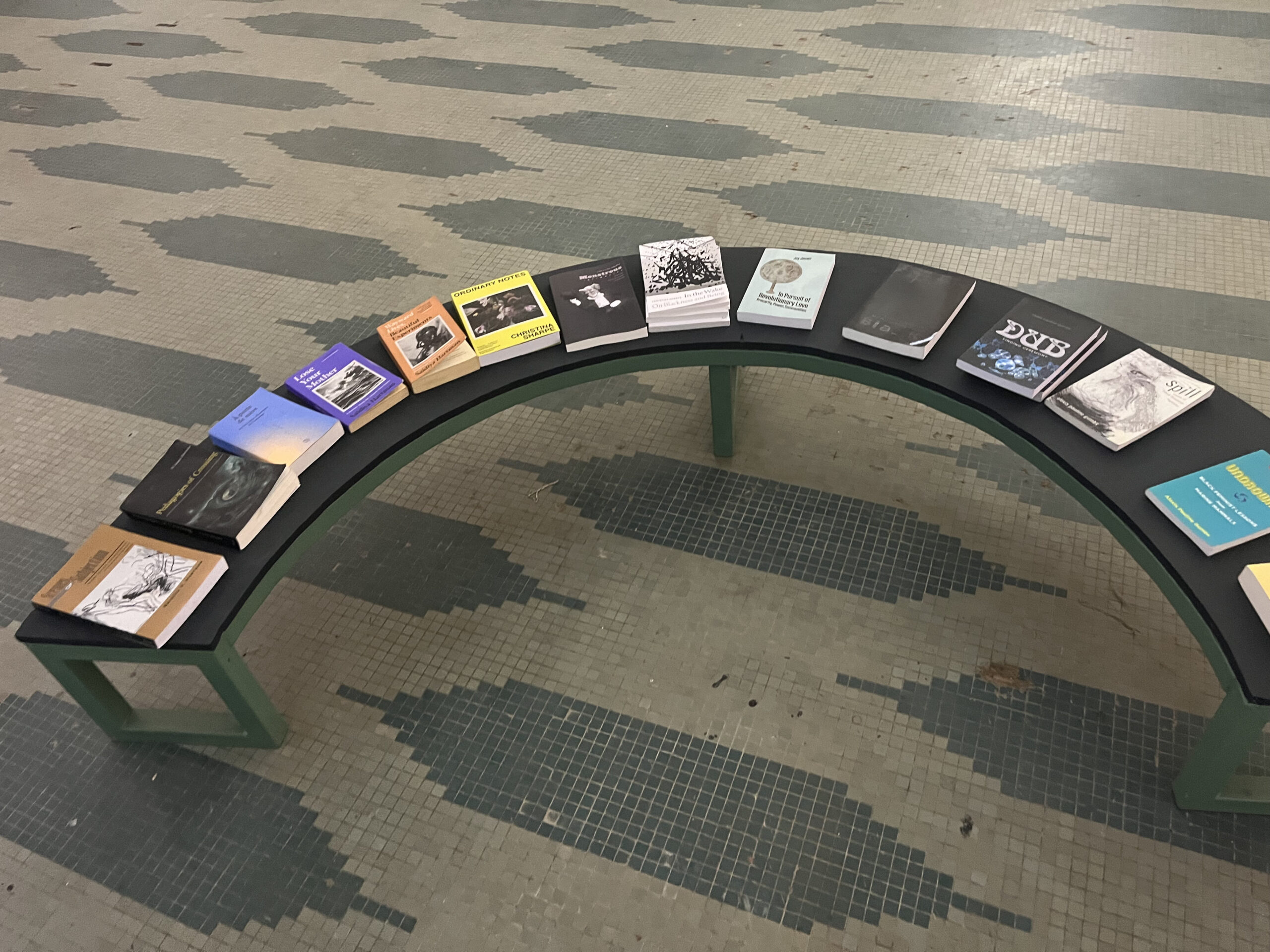
ARCHIVE ENSEMBLE – HAPTIC LIBRARY
Biennial, with Archive Ensemble, February to December 2024, Ancien Palais de Justice, Dak’Art Biennale, Dakar
A Flood is a Remembering: Communing in Catastrophe
“[T]he act of imagination is bound up with memory. You know, they straightened out the Mississippi River in places, to make room for houses and livable acreage. Occasionally the river floods these places. ‘Floods’ is the word they use, but in fact it is not flooding; it is remembering. Remembering where it used to be. All water has a perfect memory and is forever trying to get back to where it was.”
Toni Morrison, “The Site of Memory”
“Wake: the track left on the water’s surface by a ship; the disturbance caused by a body swimming or moved, in water; it is the air currents behind a body in flight; a region of disturbed flow. […] I mean wake work to be a mode of inhabiting and rupturing this episteme with our known lived and un/imaginable lives.”
Christina Sharpe, In the Wake
Inspired by Christina Sharpe’s call for “wake work” as a fugitive and resistant means of inhabiting and rupturing dominant epistemes, and Toni Morrison’s invitation to re-membering through floods of love and imagination, Archive Ensemble offers an overflowing space for deep listening, deviant learning, and riotous communion.
In the wake of constant historical catastrophes manufactured by hegemonic and heteronormative patriarchy (slavery, colonialism, imperialism, capitalism, and Zionism), we carefully take up both Sharpe’s and Morrison’s reflections as pedagogical gifts: if the movement of water found in the wake, and in floods, is the ruptural movement of re-membering what has been concealed and unloved, but also what cannot be contained and insurgently asks to be sensed, then what other swells of collective existences might we read, not as troubled deviations from a socialized norm but as threads of resilience, resistance, and remembrance against oppressive regimes?
A flood is a remembering: communing in catastrophe navigates temporal and geographical boundaries, bringing together a myriad of misdiagnosed and misunderstood waves of knowledge transmission. It invites us to read the text(tures) of textiles, recite the prose of plaits, study the syntax of sonics, and generate citations of seeds and shouts. Hence, we are called to engage with the particular yet constitutive formations that characterise our living experiences by reopening forgotten archives, which are not confined to the written word, the finitude of the book, and the conventional idea of the library.
The very foundations of the library, commonly framed within the canonised image of a treasurable lieux de mémoire or sites “where memory crystallises and secretes itself” (Pierre Nora), are problematised. Throughout history, and especially after the print revolution, libraries have become repositories of books, materials, and documents purposely selected to record and make public a specific model of knowledge based on concealments, censorship, and iterations aimed at consolidating a dominant narrative. Libraries have retraced colonial and imperialist practices, which, as Edward Said and Michel Foucault pointed out, were primarily “textual enterprises” based on the entanglement of knowledge and power. As a result, libraries housing those textual enterprises have become a dangerous source of control. According to V.Y. Mudimbe, who coined the phrase “colonial library,” imperialist accounts of Africa and other colonised regions of the world must be decentered. Knowledge must be released from present research systems that obscure the presence of other libraries, ways of thinking, and processes.
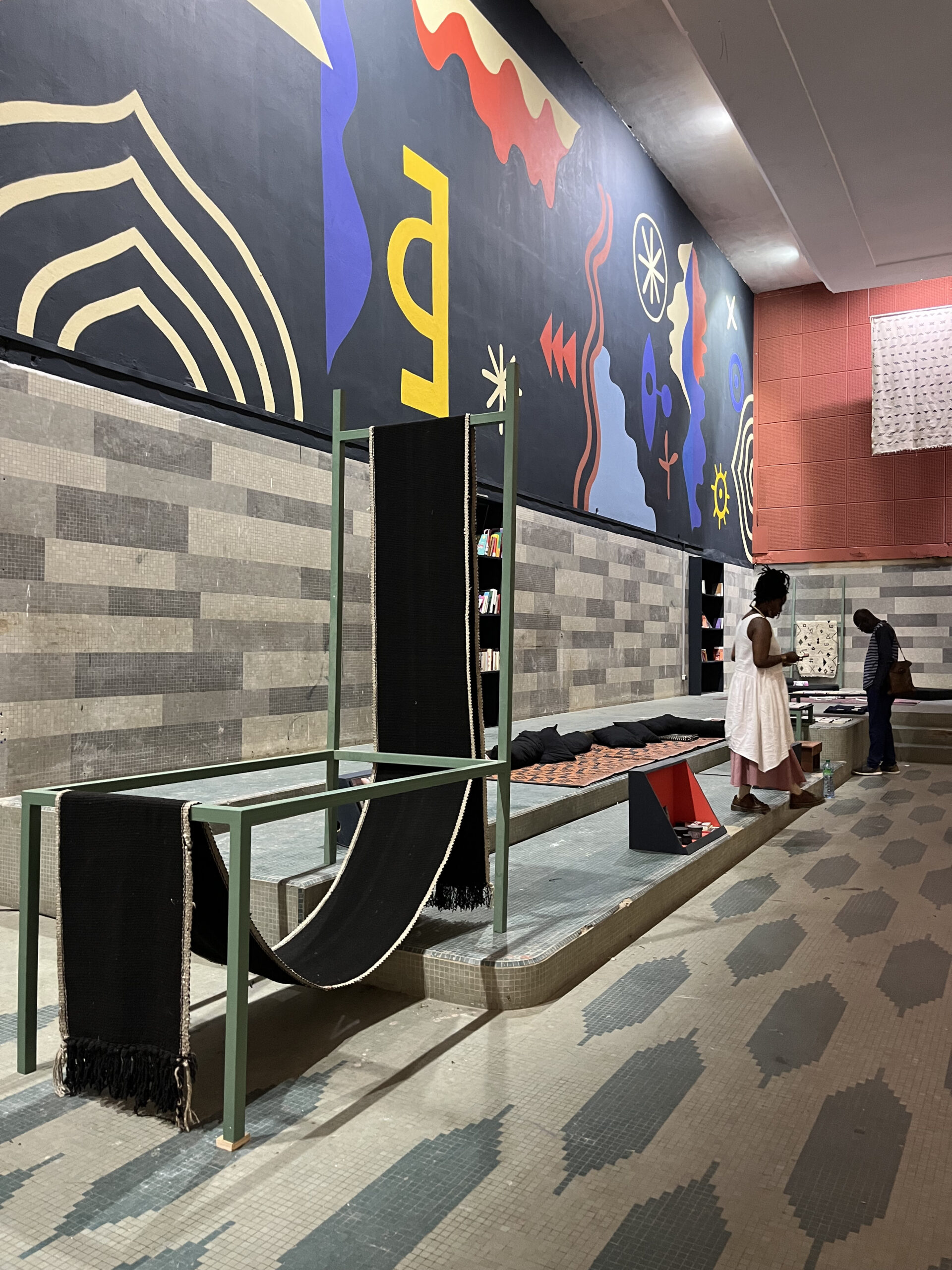
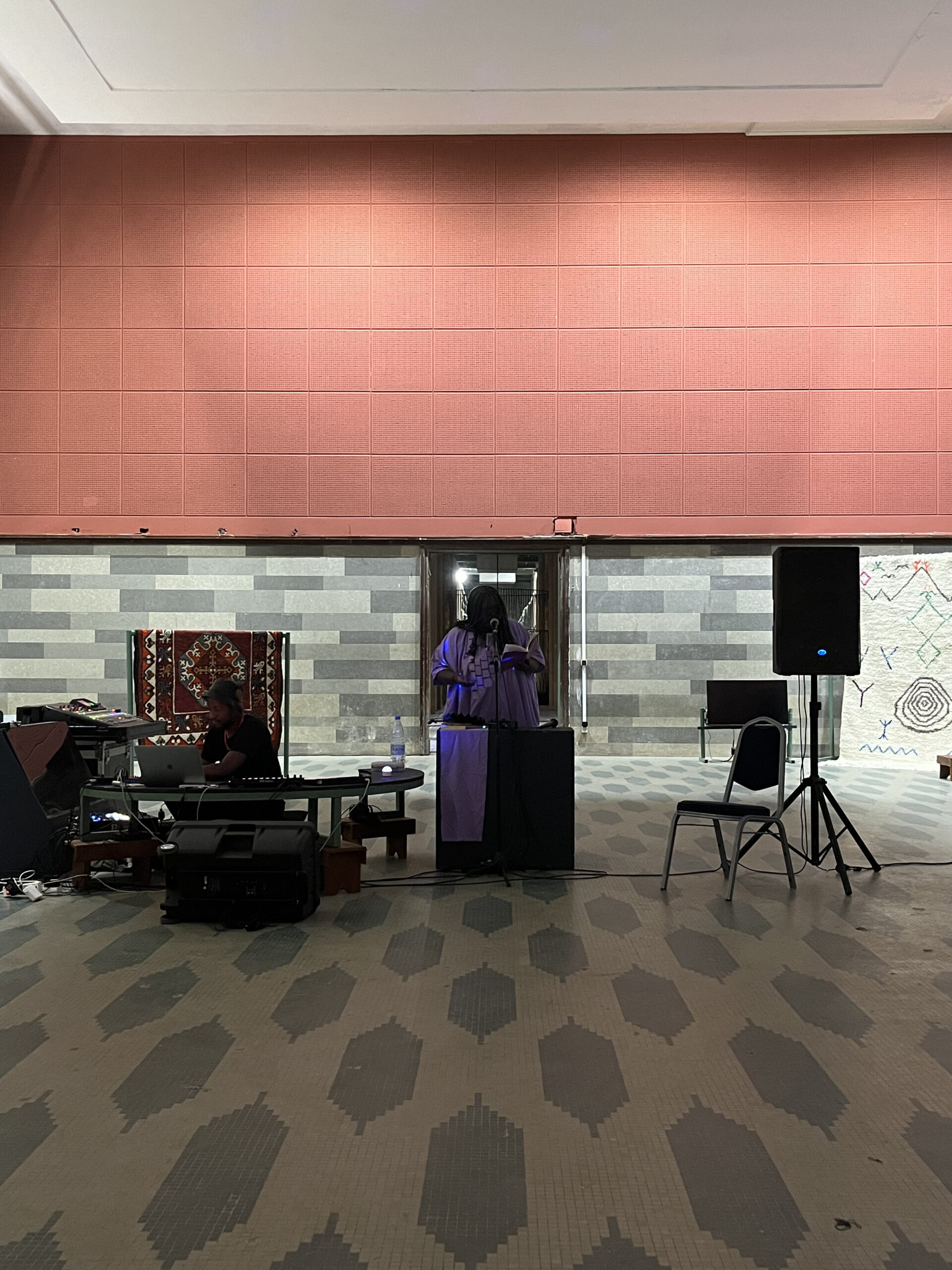
It is in the wake of these suggested pathways and alternative publishing practices that Archive Ensemble presents the Haptic Library as an anti-colonialist library that re-imagines and reroutes the library as a souq, a fluid space for communal desire, an ark(he) of social justice not delimited by the hierarchies and individualistic logics of institutions, but given to excess, overflow, exchange, and collision not only as a methodology but as a study of ways of being that are inherent “with,” “across,” and “through.” Drawing inspiration from the word “hapticality,” as proposed by Stefano Harney and Fred Moten in The Undercommons, the Haptic Library presents itself as a receptacle for extending “the capacity to feel through others, for others to feel through you, for you to feel them feeling you…” It questions the inherent dominance of sight and printed matter by bringing multiple approaches to inscribing and disseminating knowledge into proximity and encouraging interaction with a range of textural forms and modes of thought. Ultimately, it interrogates the politics of space by suggesting other ways of inhabiting sites of power.
As such, the Haptic Library infiltrates the Ancien Palais de Justice, a former courthouse and colonial architecture; it serves as a liquid laboratory of imagination and radical thinking. Here, the act of re-membering becomes a form of re-writing and resisting colonial narratives that have dis-membered affectivity, bonds, and entire cultures. Here, love provokes “floods and floods of blocked memories” to break (Morrison). Here, the doors of justice swing open to several questions, since questioning signals the movement of thought about what the wake awaits and awakens.
How can floods of violently repressed archives break how we know the world? What if the iterative power of knowledge, as affirmed and reinforced by patriarchal, colonial, and capitalist paradigms, is replaced by “unearthing and piecing together the fragmented members of existence” (Jacqui M. Alexander)? What memory is disseminated through publishing virtuality, its capacity to re-imagine the wor(l)d as “contingency and possibility” rather than “necessity and determinacy” (Denise Ferreira da Silva)? How can publishing be activated as the ground for collective solidarity and inseparability, and participate in undoing fixed boundaries? “What is opportunity in the wake of catastrophe, and how is opportunity always framed?” (Sharpe).
As we navigate the turbulent currents of the present moment, let us embark on a journey of wake work, reclaiming agency, and forging pathways towards liberation and the consciousness that we are part of a living memory that, like a flood, cannot be contained but instead requires us to hold together and “dare yearning for each other” in power and love (Alexander). Holding steadfast to our capacity to commune in the wake of catastrophe, unashamed if they call it a riot or protest, delinquent or delusional, unlawful or unsanctioned, for Morrison reminds us, “‘floods’ is the word they use, but in fact, it is not flooding; it is remembering.”
Archive Ensemble, Dakar, 2024
The Haptic Library is part of Archive Ensemble’s research formation “Publishing Practices,” which studies extended publishing possibilities by uncovering other ancestral knowledge and extra-logical thinking.
Artists: Zineb Achoubie & Lorenzo Sandoval, Rashida Bumbray, Banji Chona, Diana Ejaita, Adama Delphine Fawundu, Keren Lasme, Elsa M’bala, Nontsikelelo Mutiti, Katy Léna Ndiaye, Sara Ouhaddou, Lerato Shadi
Curators (Archive Ensemble): Mistura Allison, Kany Ndiaye Sarr, Chiara Figone, Samira Ghoualmia, Kennedy Jones, Salma Kossemtini, Tabara Korka Ndiaye
Photos: Salma Kossemtini

K Off x Dream City – Dream City, Tunis (2022)
Curatorial
K Off x Dream City 2022
K Off is the Video Art section of the Gabes Cinema Fen Festival dedicated to early-career Tunisian artists. Each year an early stage curator is given carte blanche to feature artists using the moving image as their medium.
This year, K OFF is exported to Dreamcity, in the medina of Tunis, and places artists at the heart of this budding scene to be seen.
Merging the first and second editions, presented in 2021 and 2022 , K OFF x Dream City presents the work of eight young Tunisian artists and represents a fostering of a true plurality of perspectives and approaches. It takes as its anchor these artists, their individual practices and enhances the emergence of an art scene where the reality, and experience of each artist is the inspiration.
The 2021 and 2022 selections proposed respectively by the curators Salma Kossemtini and Kenza Jemmali will be presented.
The audience of Dream City will be able to view the works of 8 Tunisian artists including:
Ahmed Ben Nessib, Achref Bettaieb, Nada Chamli, Ghassen Chraifa, Syrine Eloued, Rim Harrabi, Wafa Lazhari, Toxic Club


KOFF – Gabès Cinema Fen, Gabès (2021)
Curatorial
KOFF
The new Video Art section, K OFF is dedicated to young Tunisian artists, located in the downtown of Gabes as a linking point between el Kazma and Agora. This exhibition consists of a heuristic research of the moving image, highlighting the video as a medium, a material of creation, reflection and criticism. Reflecting on its limits; is it a succession of images? Still or in movement? Is it the device of display that defines it? Or the process of its creation? Is it a dialogue between the sound and the image? or the reflection of the space of its genesis?
This relationship to the image that each artist entertains with the video, as denotative as it may seem, is fundamental to understanding the process that it has undergone. Declined in different possibilities by the artists, it is not limited to what is perceived, but to what it represents for each one of them. It takes the shape of a drawing, a sound, a journey, a memory or a criticism. As ambiguous as it is, it is defined by the process and the context of its genesis.
Exploring video in its raw, metaphorical, experimental and sound state, it offers a crossover of an aesthetic that evolves from an itinerant approach dealing with the being and becoming of words, identity, the intuitive and a reflection of a socio-cultural reality. As complex as the sphere in which it emerges, the artists featured on the K OFF have found in the image and more specifically, the moving image a field of experimentation and exploration mixing different media and visual techniques.
The approaches and the processes they crossed are diverse. Starting from experiencing the text; for Ahmed Ben nessib “to work from the text”, means for him to do everything to exceed it. From a back and forth between the illustration and the tale of Isaac, the artist sets up a technique that he defines as “the technique of the swimmer”; which implies to rewrite the words in dichotomy. Drawing by drawing, he animates them letting what it precedes and what it succeeds in reach. He explores the animation to define one that does not lie in between the drawings but in the drawing itself. Investigating this fragmented process between the word, the drawing and the animation, Ben Nessib questions their literal definitions and ends up creating his own.
The text has, also, accompanied Rim Harrabi, in dealing with the experience of the vanity of Galway Kinnell’s poem in her imagination. Its experimental representation is located in the knots that the poem presents, it stages the latency of the characters in a bewitching atmosphere, to the extent of chimera. Stated in prose from the adult to his child and translated by Harrabi into an audiovisual installation.
As for the work of Cheb Terro, it is a process that turned into a tribute to an artist of the underground hip hop scene in Tunisia. An installation that reflects the movement he created “Toxic Club” and the polyphony of his writing. In this context, will the video clips he creates serve as vectors of transmission by the nature of their proximity to the young public? Will they serve as an archive for the critical outline of a socio-cultural space that he describes as a “sub-planet”?
To define these dimensions or to record a space, Asma Laajimi traces a memory of her childhood and a place that is getting altered. With an observant and at the same time passive glance, she walks along the urban space deprived of its seasonal dynamics, vowed to a decisional power of an inert government. From an absurd image on her happy steps, she documents this space that cradled her summer routine and that is now disintegrating. A present outline that reflects the urban context of Gabes.
The space serves, in fact, as a medium for Ghassen Chraifa. With an intuitive gaze, his daily life is provided with aesthetic gaps that accompany him in different temporalities. He records moments of stillness or mouvements in visual frames like a road journal.
For Dora Dalila Cheffi, her understanding of the space extends from the geographical construction, towards a link to her identity and herself. She unravels the relationship of her mixed roots into an ode to identity through an interpretation of the Finnish national anthem in Tabbel Kerkennah, visually accompanied by forms of contrasting colors that interact in a tryptic installation. From these poetically assembled forms, she attempts to achieve a balance between her plural identity, heritage, language and music.
KOFF is in a sense a space of reception, leading to the visual perception of these multi-layered realities, lived and experienced by the artists. The transcripts of how it influenced their aesthetic expression, displaying their point of intersection around their approaches. The audience will navigate between six distinct experiences between several visual, digital, raw or edited mediums having their contexts defined as an anchor point.


