Sana Chamakh – Strata of being, أن تكون
Curatorial
SANA CHAMAKH – STRATA OF BEING, أن تكون
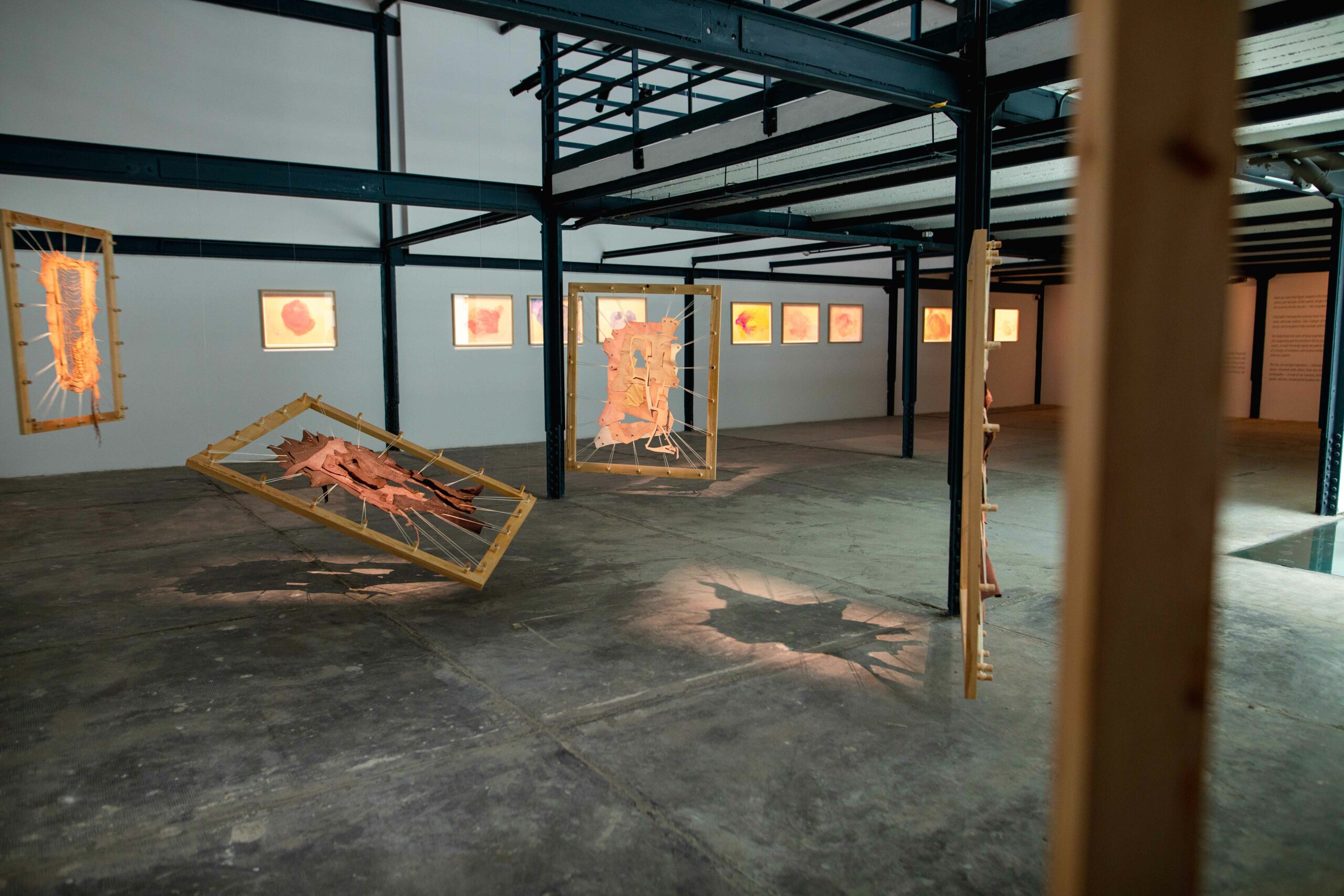
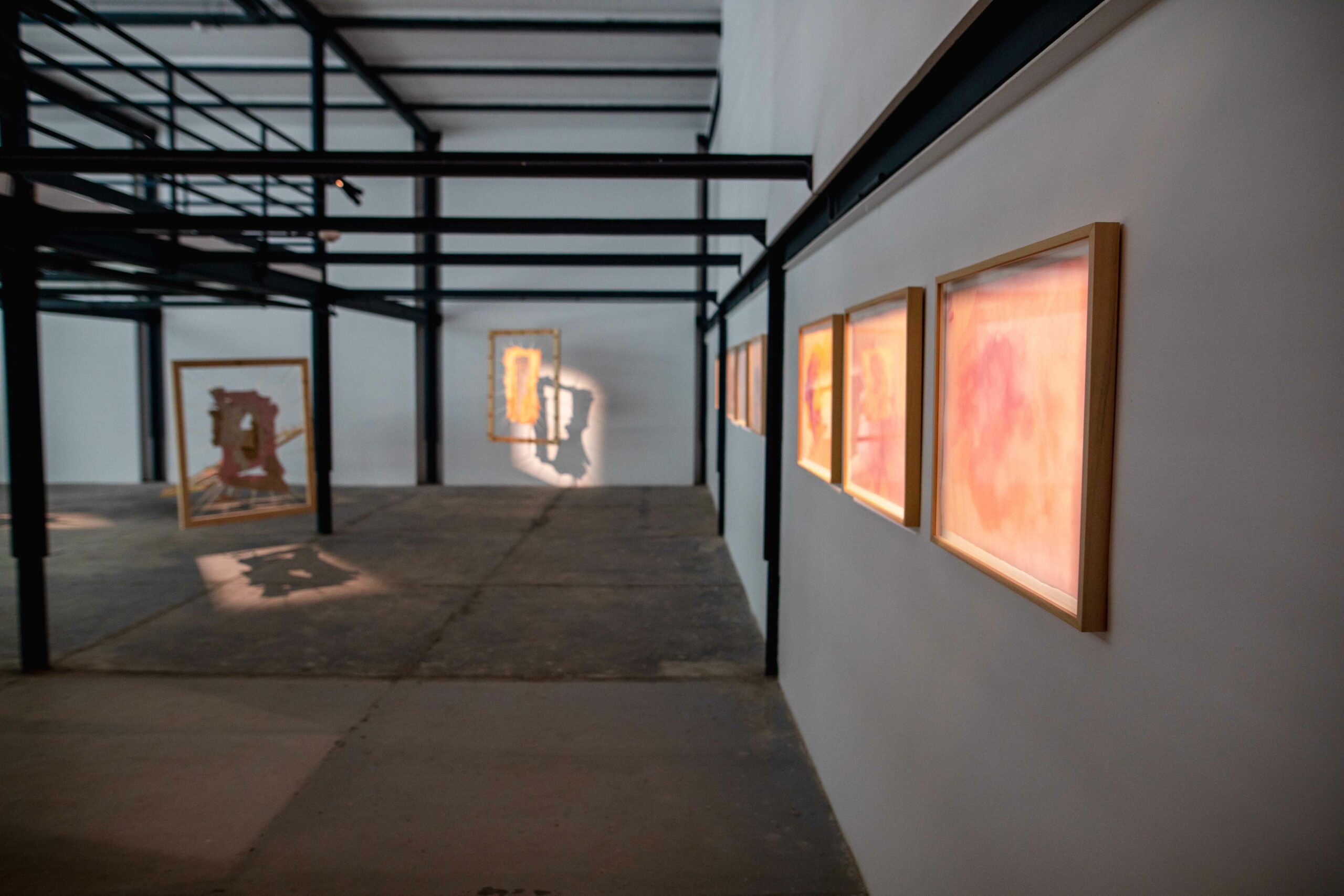
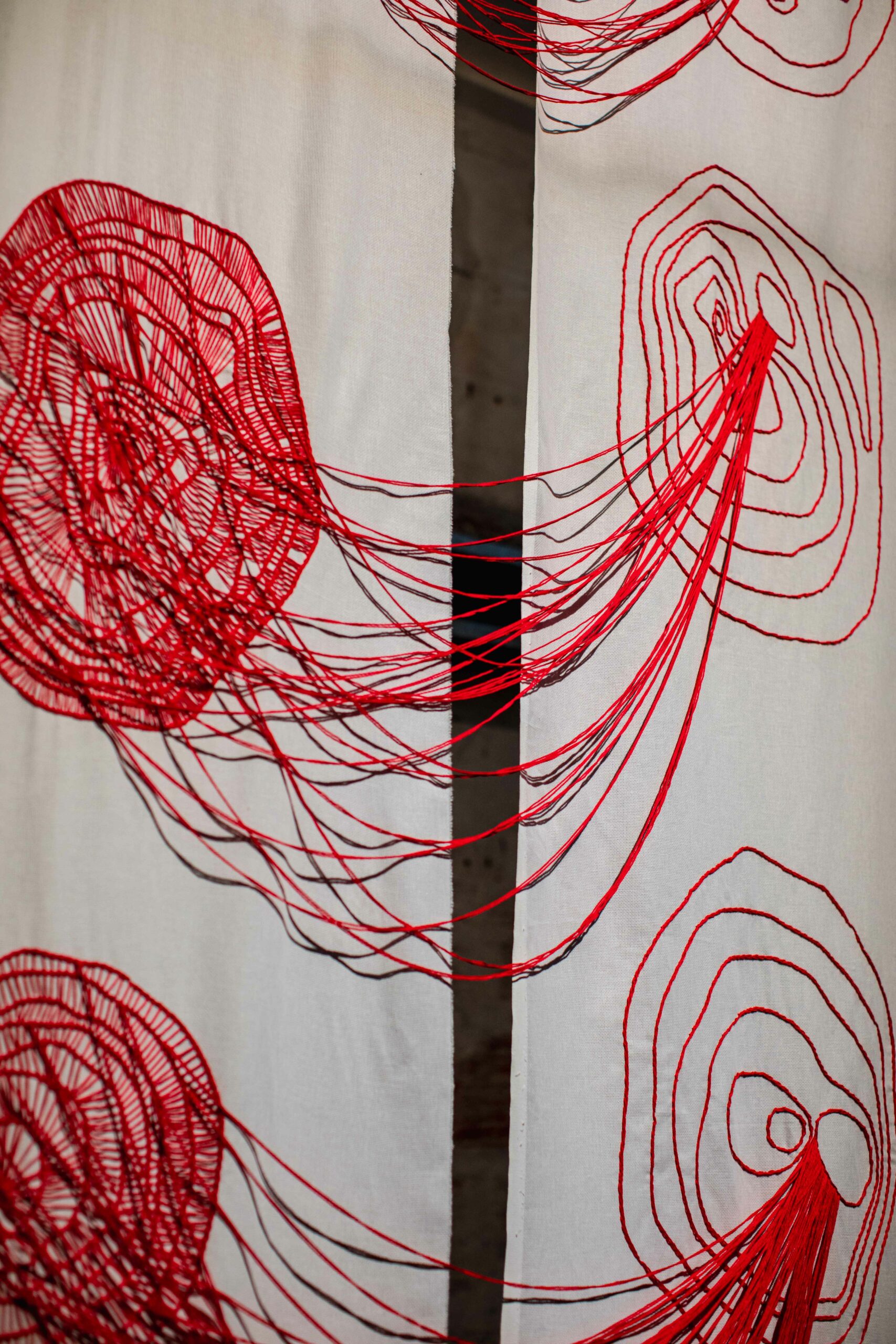
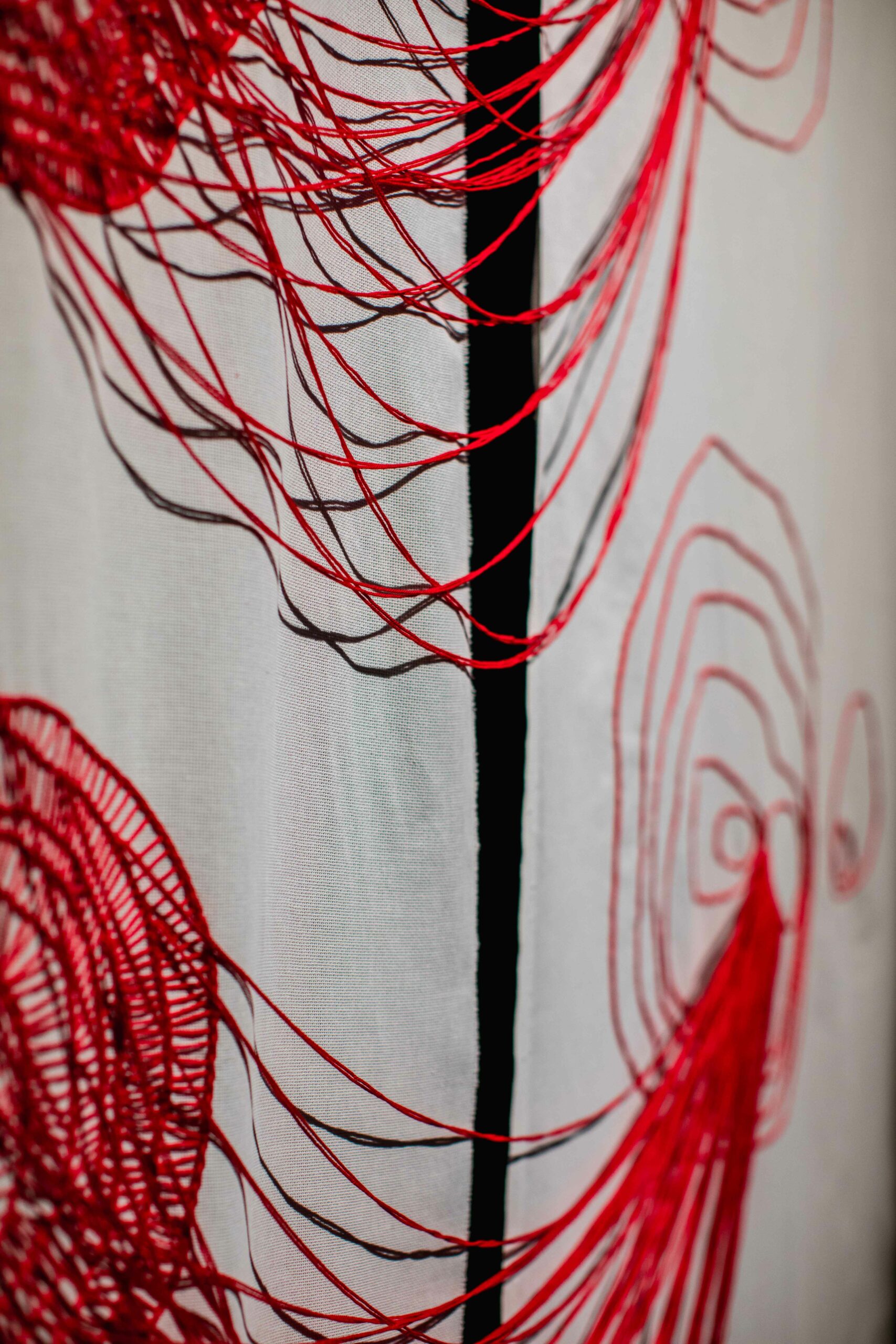
Solo show — 19 April – 30 June 2024 — 32Bis, Tunis
“And look, mother,
I am
a dark temple with your true spirit rises
beautiful
and tough as chestnut
stanchion against your nightmare of weakness
and of my eyes conceal
a squadron of conflicts and rebellions
I learned from you to define myself
through your denials.”
Audre Lorde, Black Mother Women, 1971
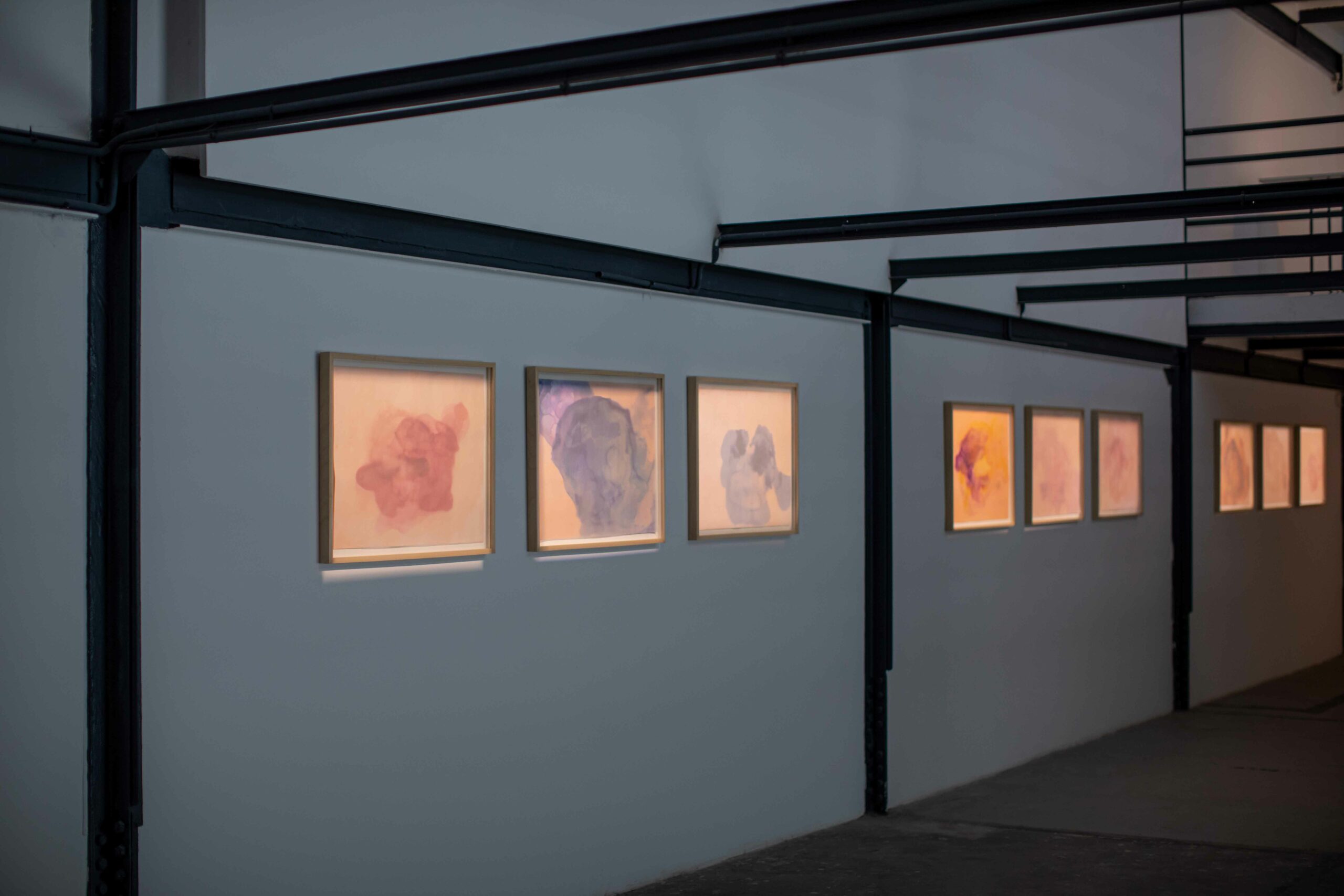
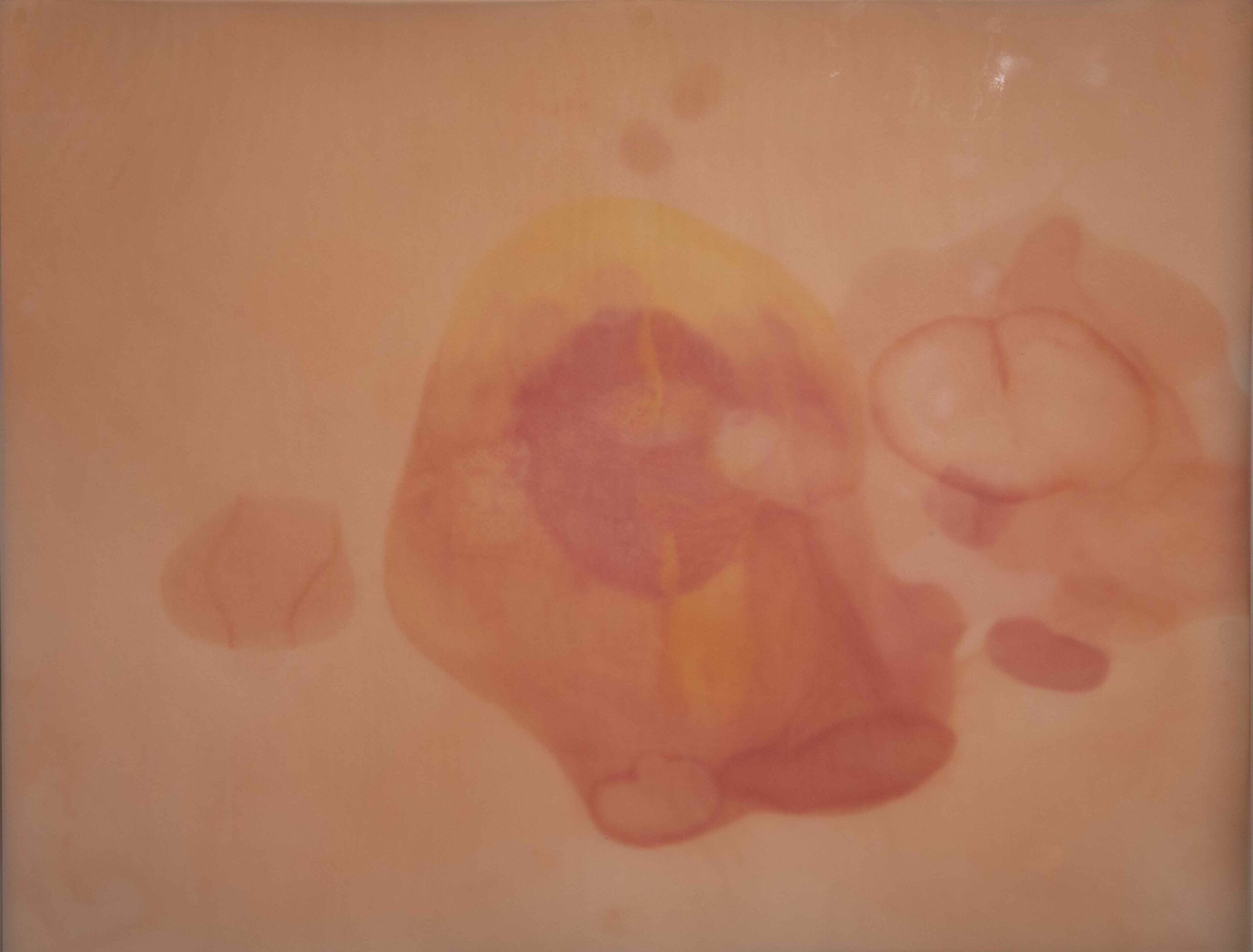
The flesh, in its myriad forms, emerges as a symbol—a raw remnant of our past, a tender fragment of our present, destined to fade with time. It bears witness to our struggles, etching memories into our very being. Our bodies, repositories of experience, shelter a visceral knowledge, a living testament to the events and emotions that have shaped us. Like an echo of the mind, the body replays the past through somatic symptoms—a silent language, conveying the weight of our history, the imprints of our trauma.
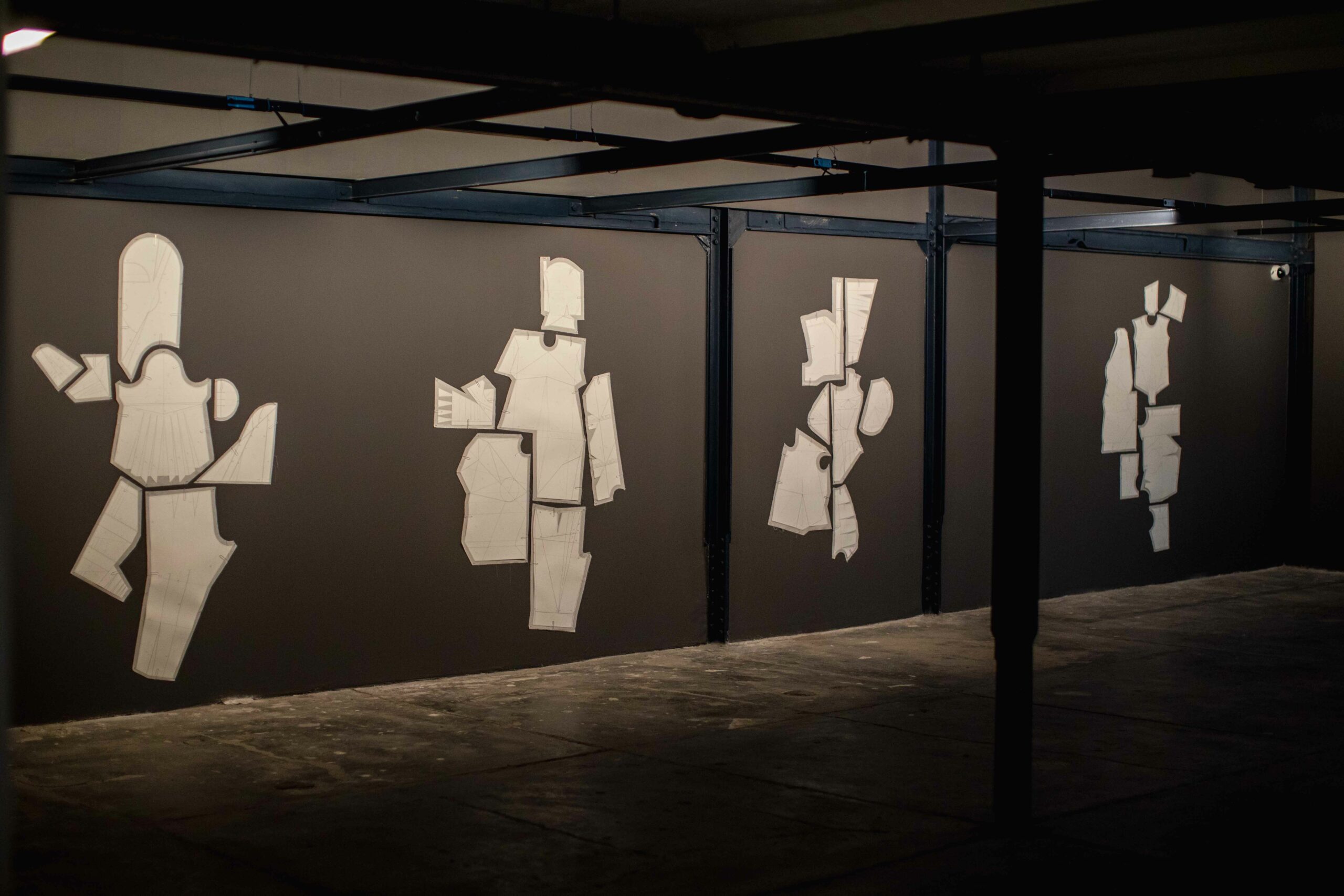
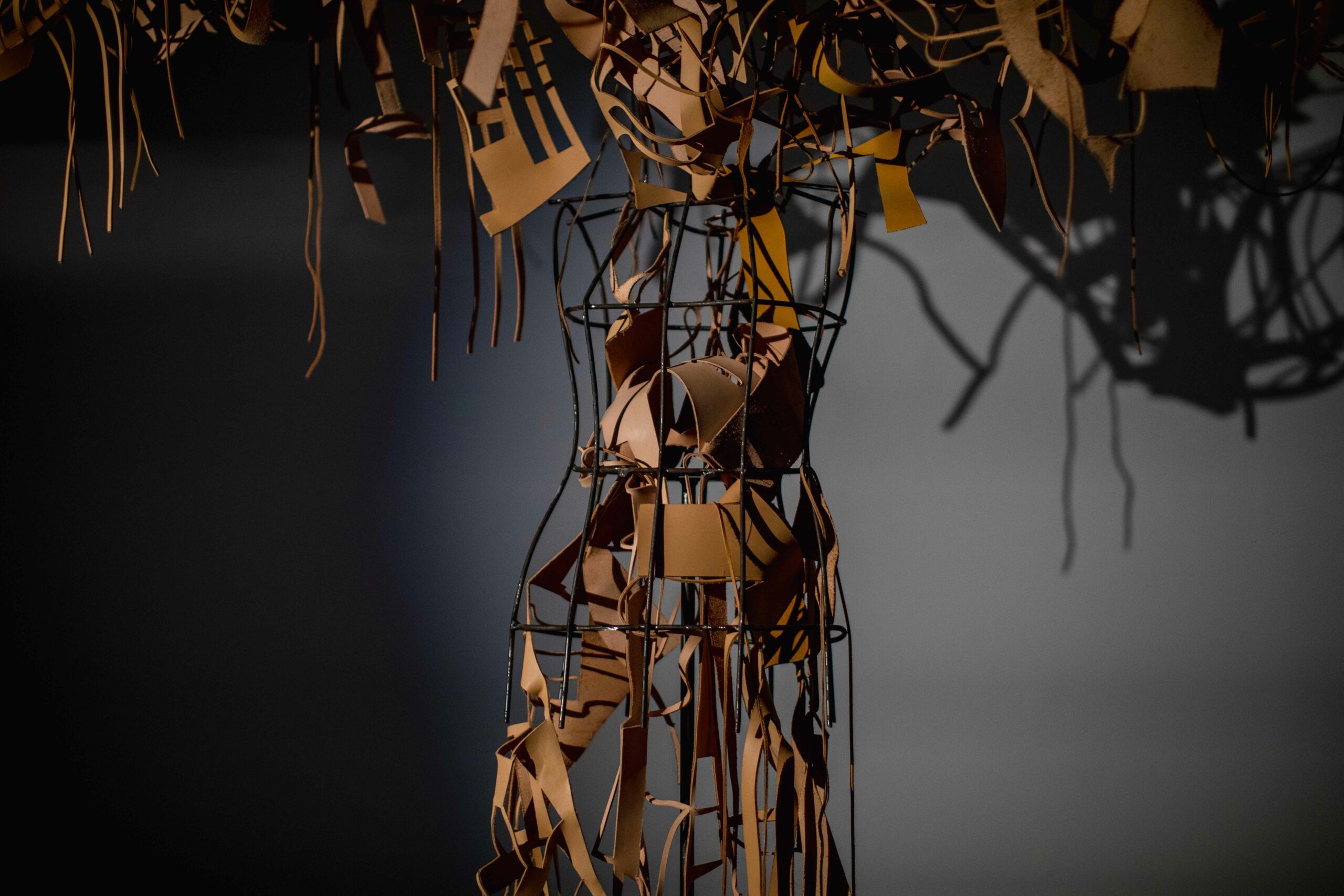
Have you seen that figure, draped in the trappings of society’s expectations? Its long coat, woven from the norms and dictates of the world, weighs heavily upon its shoulders. Hidden underneath this facade lies the essence of who we are—the unspoken truths, the silent struggles that shape their existence.
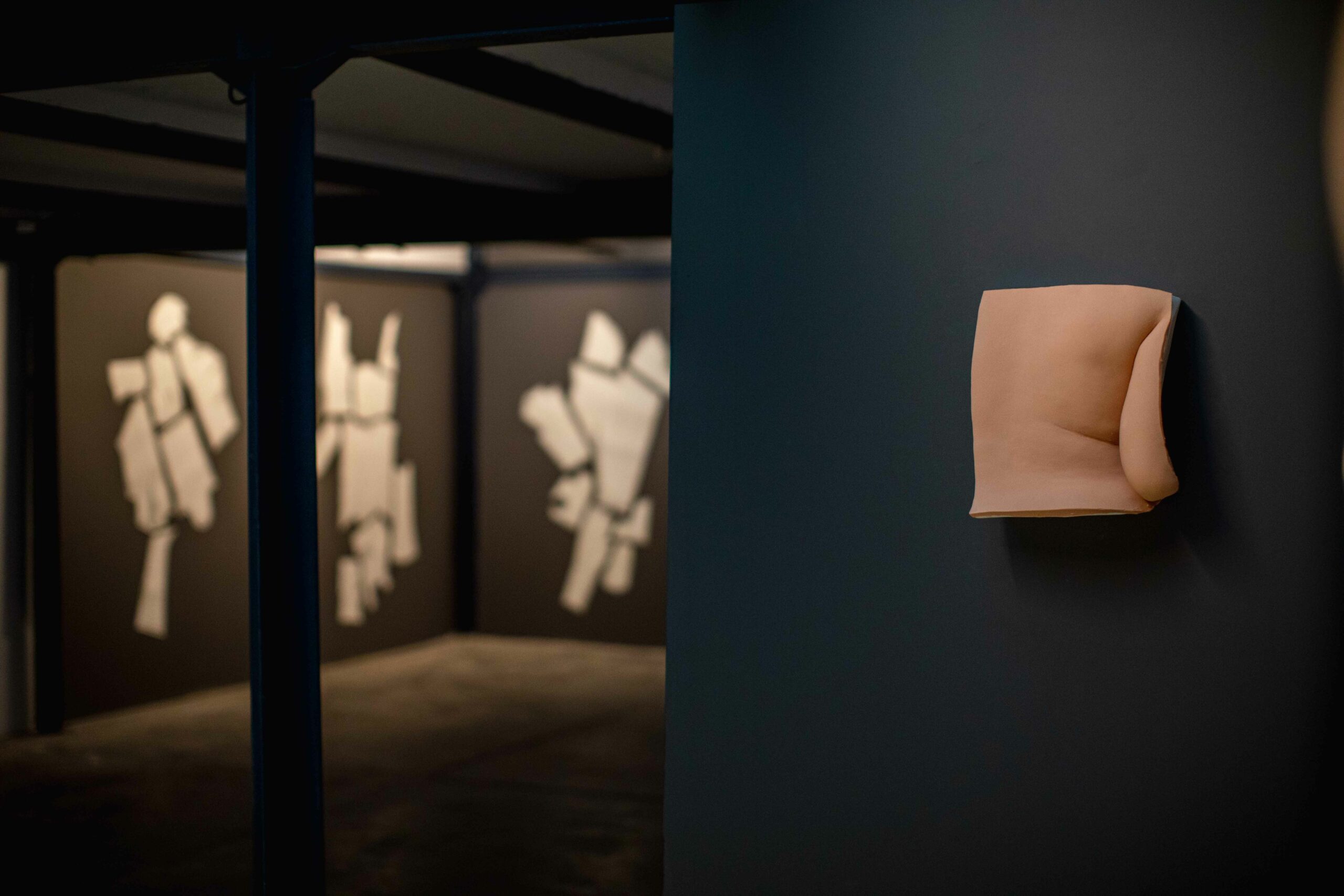
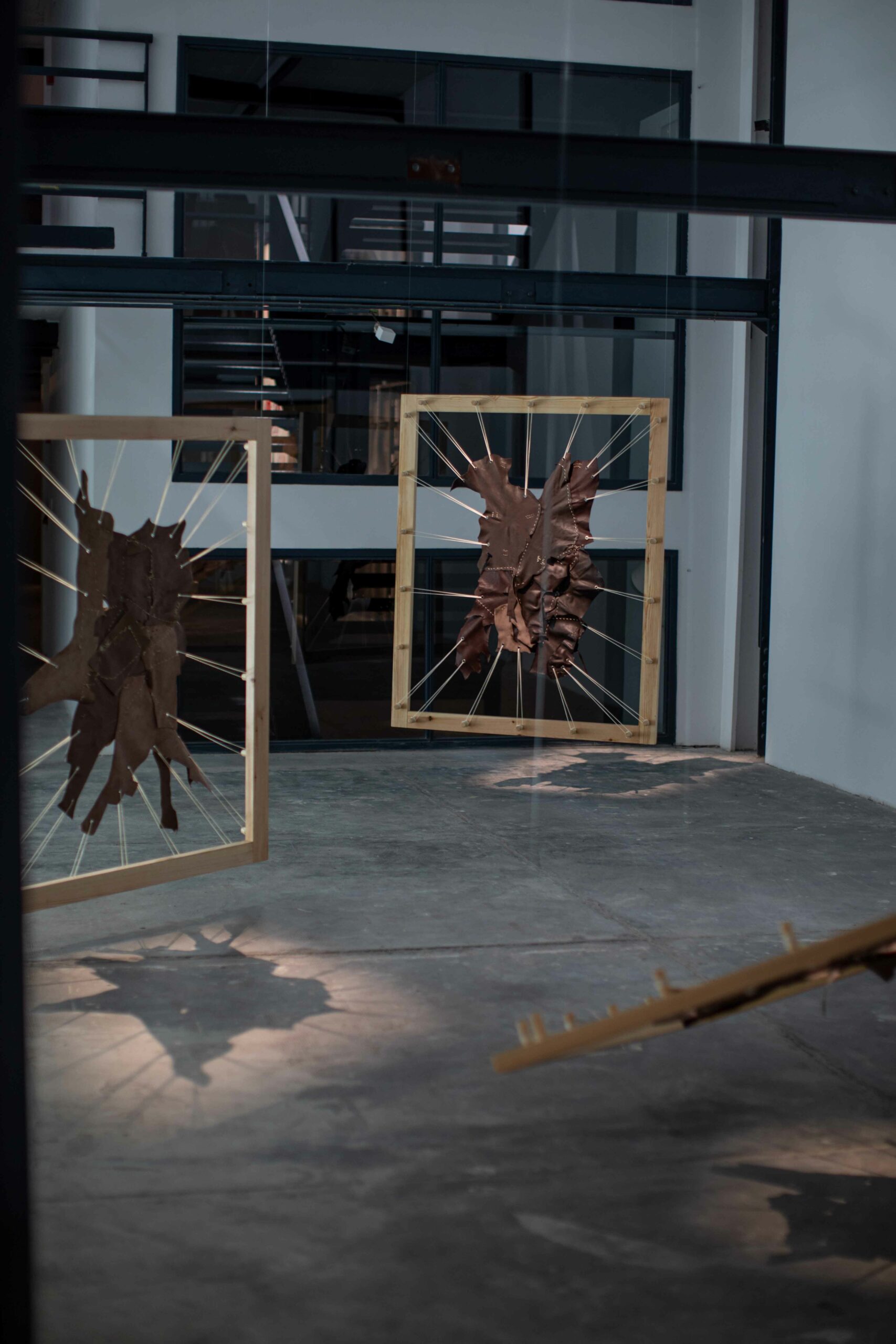
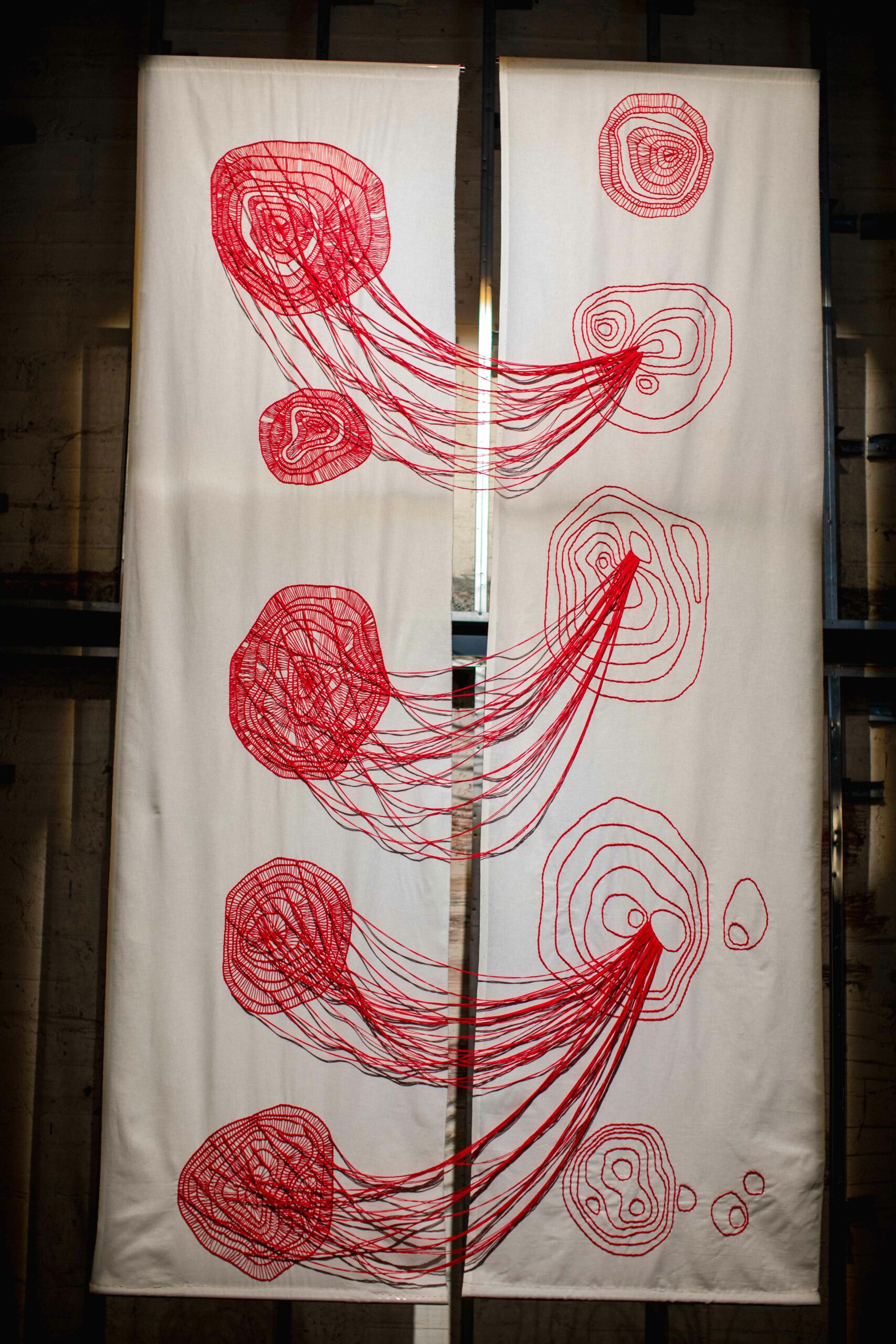
Chamakh’s introspective journey leads her inward, sculpting and shaping her skin to provoke feeling, to evoke alternate realities. Like a keeper of her own consciousness, she screens through the fabric of her being, selecting pieces that resonate with her present persona.
The body keeps the score of these experiences; it ‘knows’ the event in its ‘flesh’ and is a living reminder of the happening and the emotions felt at a particular time. Just as the mind can be triggered to recall past events, so does the body replay the past in the form of somatic symptoms. These symptoms are the stain of a history of emotions and trauma embedded within the tissues, which form a dynamic, unconscious memory system.
We, too, are complex tapestries—interwoven threads in the fabric of cultural and somatic systems. Our stories, entwined with others’, form the rich narrative of humanity.
Yet, beneath the surface lies a silent cartography—a map of our traumas, etched into the very fabric of our being. Each scar, each blemish, speaks volumes, revealing the burdens we carry, the wounds we bear.
In her artistic vision, Sana grants the body agency—the freedom to be molded and remolded, to wear its scars as badges of honor. She endows the body with the ability to un-pack the plethora of baggage it was carrying. And in the end, she proudly dons these fragments of her story, laying bare the layers of her existence for all to see. Here, we are encouraged to cast off the veil of fear and confront the intense depths of our emotions, revealing the concealed stories that reside within us – both those handed down to us and
those yet to be discovered.
Perhaps in seeing, we find bliss, and in breathing, we take a step into the unexplored raw realms. In this act of liberation, we find solace—a release from the burdens that bind us, a step toward reclaiming our true selves.
Amidst the scars, lies a paradoxical beauty—a cathartic release found in the transformation of pain into expression. Through the flesh, our stories find voice—words, screams, echoes of our deepest fears. Each scar, each somatic field, becomes a testament to our resilience, a testament to our ability to transcend.
Salma Kossemtini, Tunis, April 2024
More :
Celebrating imperfection and resilience: an interview with Sana Chamakh, by Emna Lakhoua for artframe
Les corps somatiques de Sana Chamakh au 32 Bis, Olivier Rachet for Diptyk Magazine
“Strata of Being” de Sana Chamakh au 32 Bis : La cicatrice, Asma Drissi for La Presse Tunisie







Thameur Mejri – Over the Edge
Curatorial
THAMEUR MEJRI – OVER THE EDGE
Solo show — February – June 2022 — Selma Feriani Gallery, Cromwell Place, London
“A drawing would-it command not to name it.” This quote reminds me of the first time I experienced Thameur Mejri’s work. It’s like a puzzled feeling of not knowing where to look or where to begin navigating between the de-constructed lines and elements. My gaze started seeking elements I might know or that I could name as the eye generally seeks to settle on the familiar spots, in its background as the human being always seeks comfort.
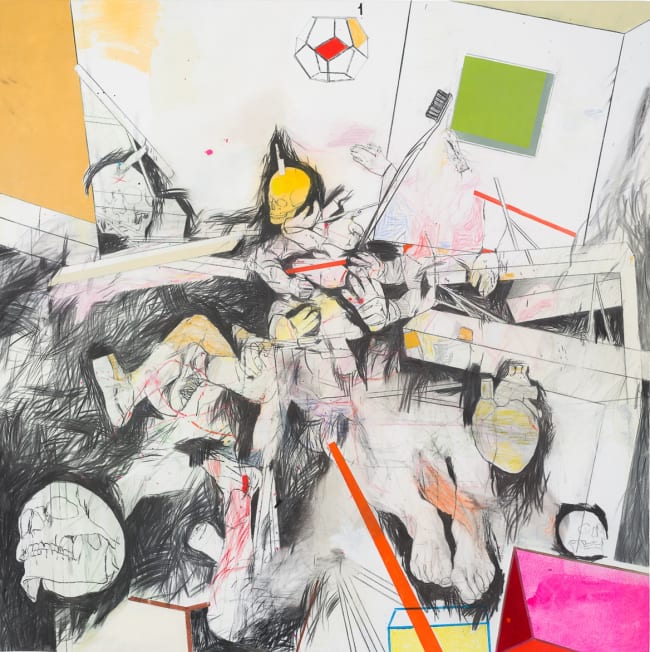
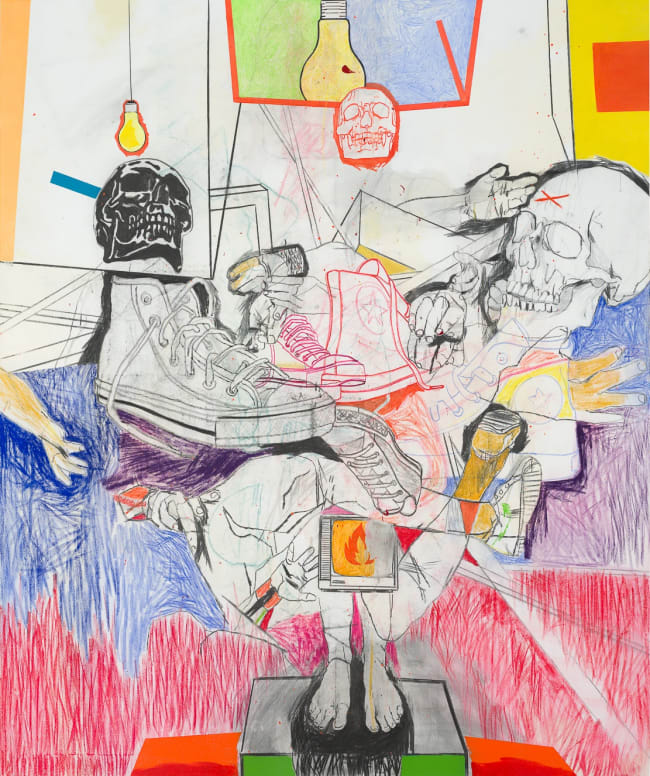
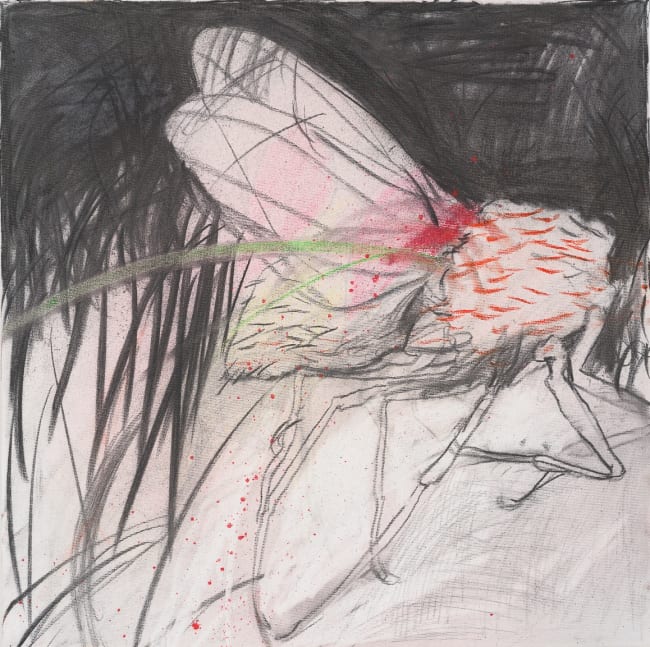
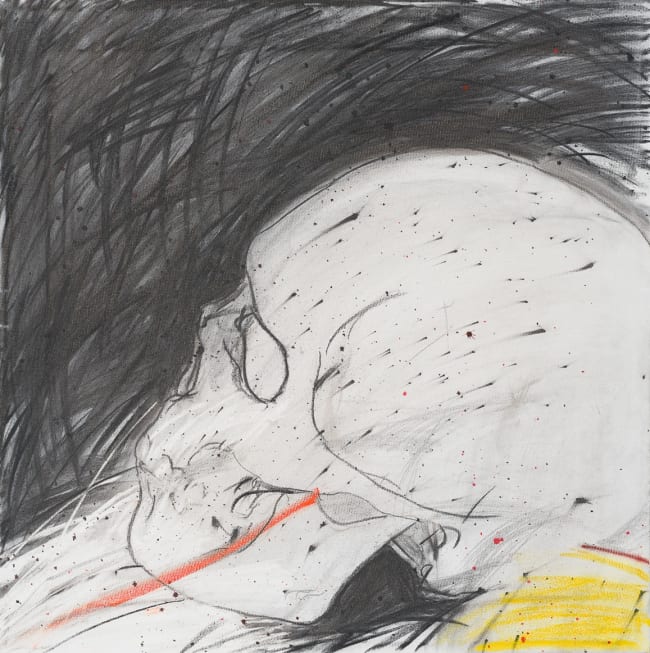
The skull, the fly and the TV shed a statement by their scales and duplication. A quite complex and polysemic combination which leads me to compose their meaning, to look for plausible connections to the world in which we live, or simply in the artist’s narratives.
These were the first elements and milestones of Mejri’s body of work, the protagonists of his productions who appear in his paintings, drawings or sketches. The skull as an ultimate symbol of vanity which tends to orient the reading like a compass and the inevitable fate of death, along with the fly by its light and absurd presence and the weight of the television which influenced a whole generation allied to the information, to the advent of the mass media and of its power of influence.
The return to the fundamentals such as the pictorial elements used by the artist are at the centre of Over the Edge. The exhibition features the curious connection of a deconstructed reality characterized by shredded bodies and recomposed in a pseudo-anatomical logic that suggests rather a tumultuous being in juxtaposition of the artist’s mundane everyday practices.
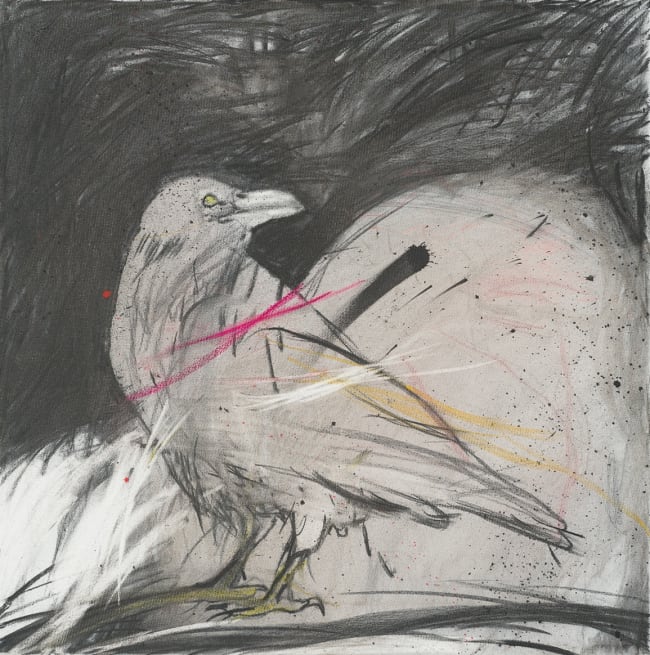
Drawing with charcoal was a major artistic gesture for this exhibition. After painting and mixed media, the drawing has found its place in the space of a canvas as an act of rejuvenation and of research at the same time
Along with the pictorial leitmotiv that followed the artist’s journey, the body of work is centred on the genesis of any drawing, which is the point, the line, and the brushstrokes of the flashy colours that serve as a plenum background to black bold graphite hatches.
The assemblage of forms remains as a deconstructed anatomy as Mejri perceives society, the psyche, the political, transposed into the drawing as a metaphor or figurative meaning. As if we pushed the limits of the painting, had peeled its skin to see what remains. We will find a drawing with graphite powder with a hatched treatment where the skull, the fly and the television master elements that have driven the work of Mejri since its genesis are honoured.
The exhibition will deal with what can be kept of the traces of life, what can be maintained of a deconstruction process, resilience and exposure of the ordeals experienced by the artist, materialised by the remains of the characters who carry the pennant of vanity of socio-political postures, of a daily practice or of an introspective relationship to oneself.
One needs time to navigate, contemplate, decompose what Mejri’s work offer as an experience. A layered reading, where each time an element pops out or even a kid’s drawing in between of sharp elements, skulls or knifes. It pushes the limits over the edge of reading and perceiving giving space to time, colours and shapes to fulfill a contemplation on a complex reading journey.
- Derrida, prégnances quatre lavis de Colette Deblé,s.1, brandes, 1993,s.p.



Sonia Kacem – Jelliz & Gestes
Curatorial
SONIA KACEM – JELLIZ & GESTES
Solo show — 8 May – July 2023 — Selma Feriani Gallery, Sidi Bou Said
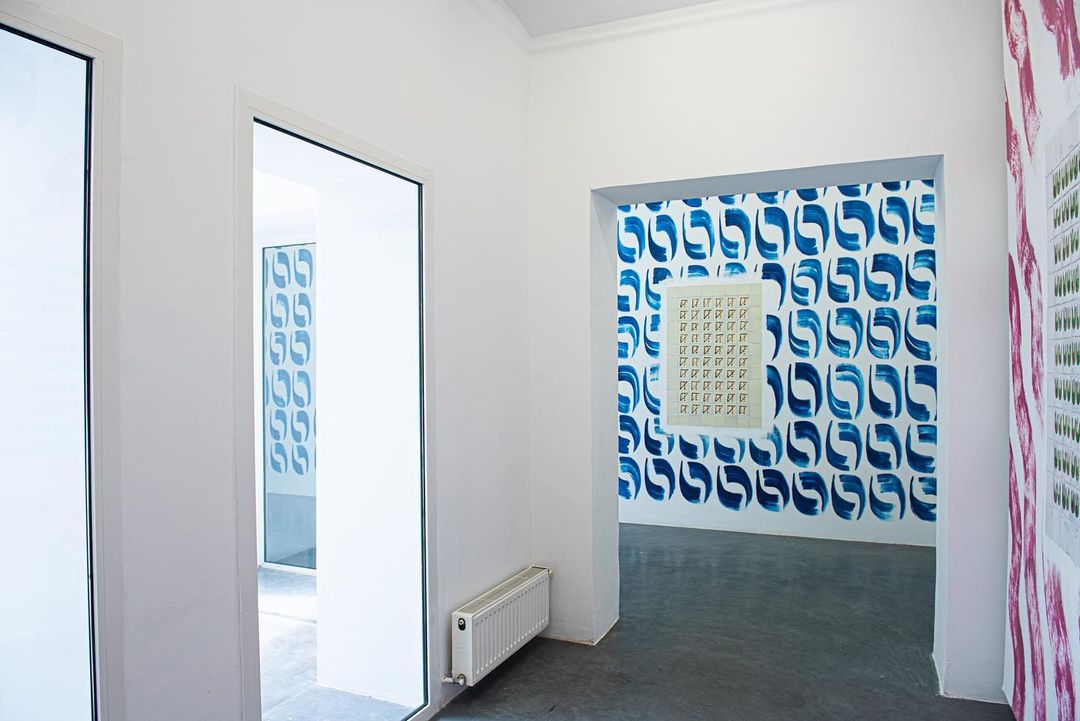
In May 2022, Sonia Kacem took part in the residency program at l’Atelier Selma Feriani Gallery.The idea of abstraction and what it represents in the Arab world interested Kacem even before her residency at L’Atelier Selma Ferani Gallery. Once in Tunis, Kacem’s wanderings in the Bhar Lazreg neighborhood (an artisanal and industrial district where the studio is located) served as a landmark to define her forms, gestures, and colors.
The random scratches and engravings on the concrete walls she encountered often implied a spontaneous gesture rather than a precise and well-measured approach. This motivated her to create paintings and patterns emanating from the various impressions she gathered during her visit to Tunis.
Initially, her intuitive movements guided her thoughts through the enclosed space of the Gallery. Consequently, the idea of a concept that could be present in each room as a leitmotif took hold to act as a guide and a common thread to navigate of the different spaces.
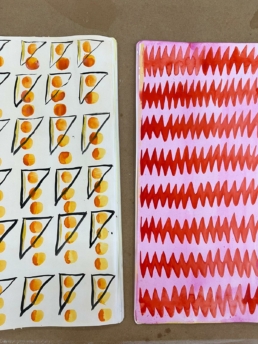
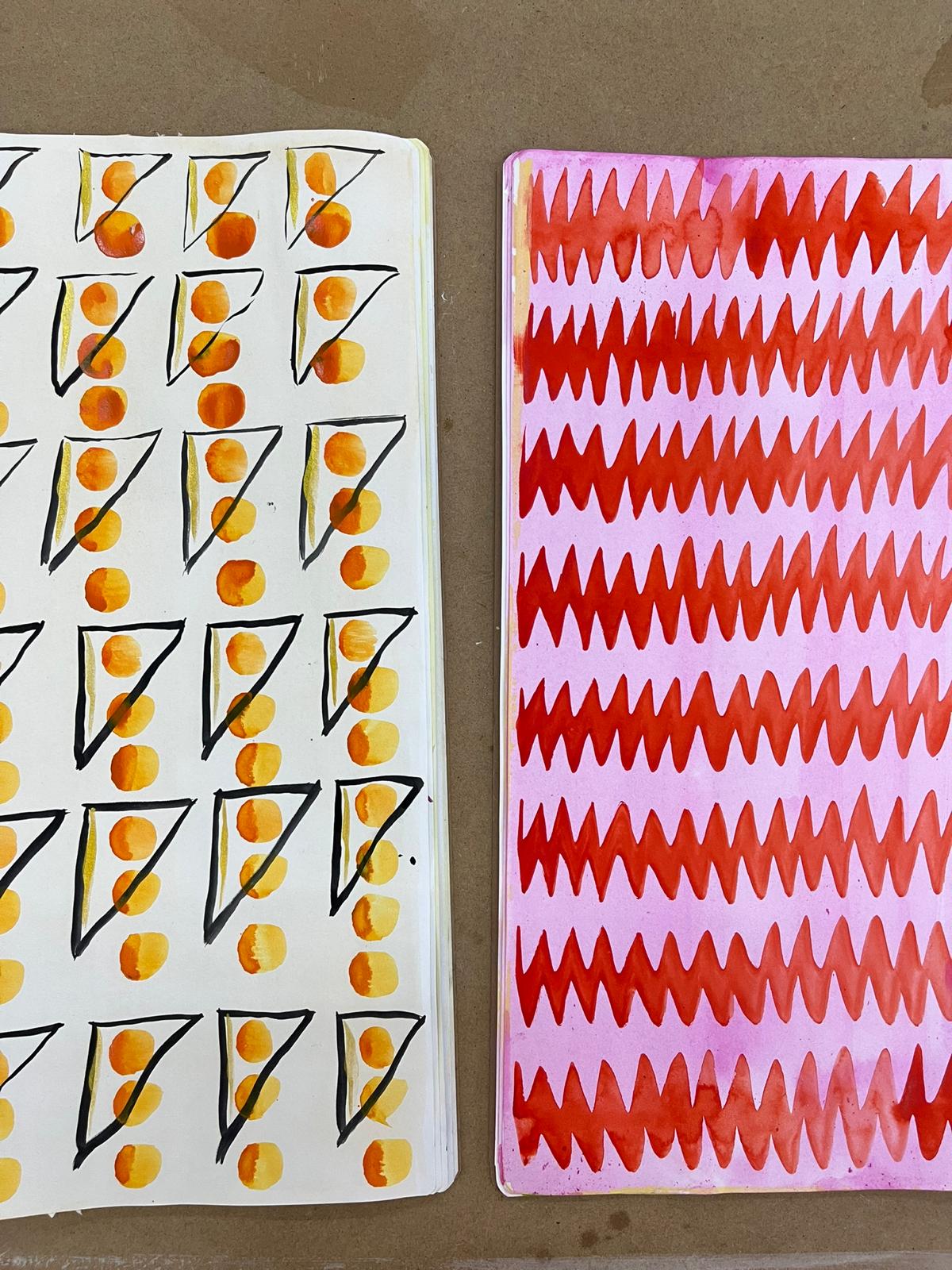
Her watercolor books, a tool ever-present in this residency and in that of Cairo, served as a base for her work to document her stay in Tunis. Influenced by urban life, stories she heard and the emotions she felt when in urban environments (or settings), whether it is the soundscapes, stories, the architecture and its volumes, everything has been translated into colors and forms that reflect the characters they have transmitted to the artist.
Usually, Sonia Kacem responds to spaces insitu by working on large-scale installations with more sculptural environments where the audience navigates between artifacts.
For the Jelliz & Gestes, Kacem studied the gallery’s blueprints as volumes nested within space. She noticed that rooms were generally rectangular, placed one after the other, producing a sense of reaching a dead-end and turning back. The repetitive act of forms, such are gestures in her watercolor books served as a leitmotif also present in traditional Tunisian architecture.
This work was done in close collaboration with different artisans, aligning discussions with feasibility and know-how. This gave form to a multi-layered idea through knowledge transfer that serves as an intrinsic component to the realization of her works.
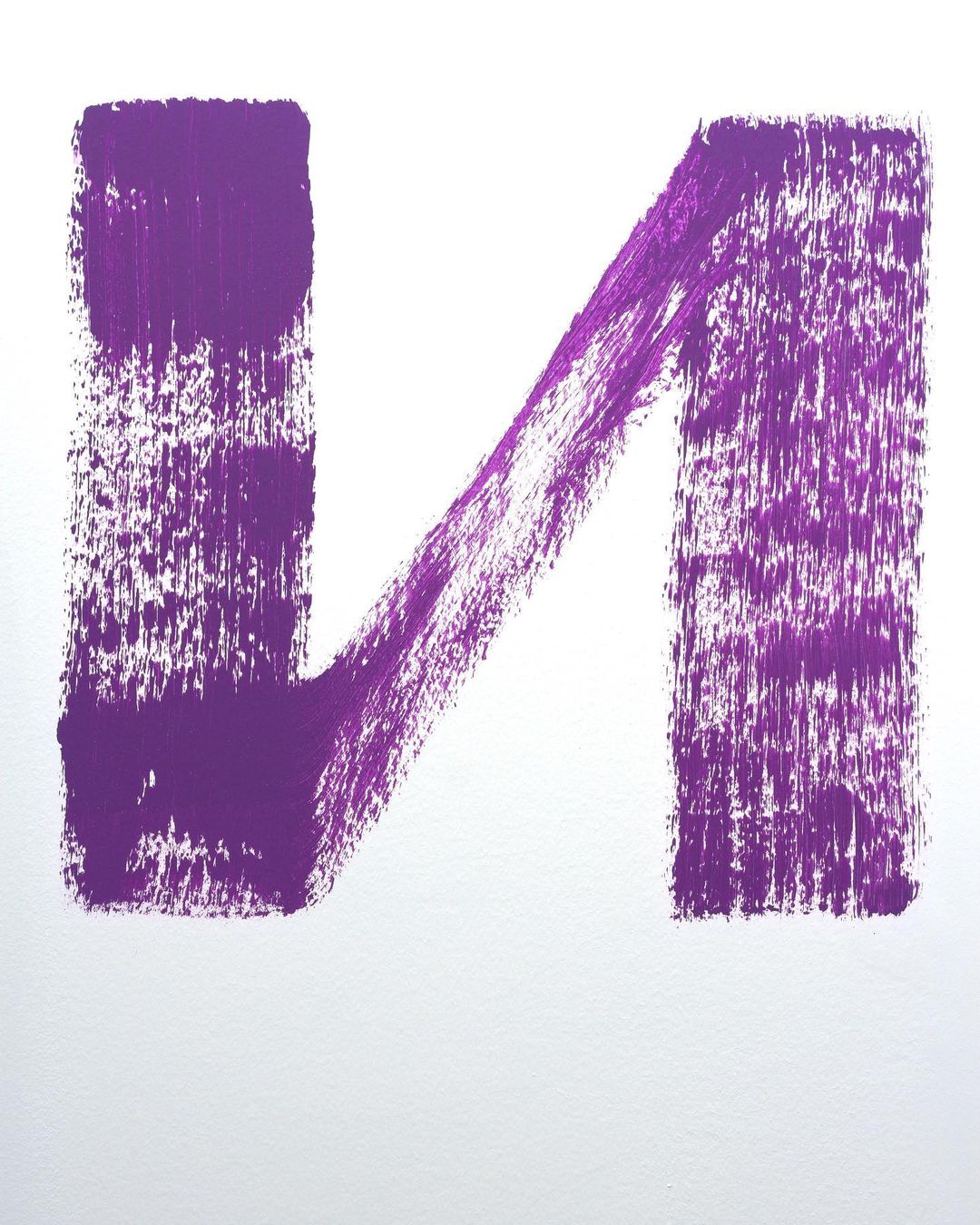
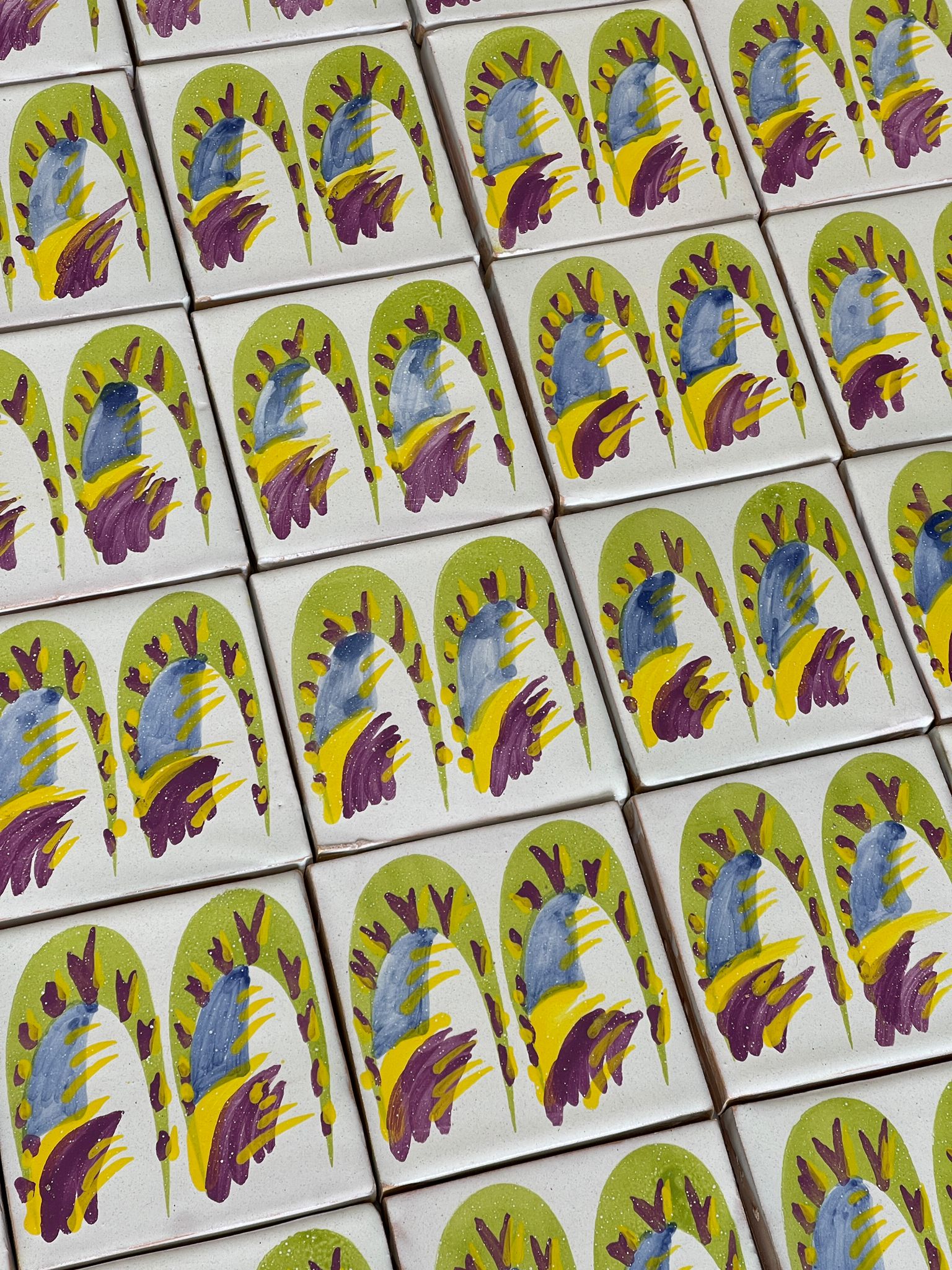
The patterns are not just ornamental, each having a form and characteristic that serve a purpose in each tile and can convey meaning through their creation and interpretation. The form thus becomes a transmissible and translatable language handled as typography written with different hands.
Working manually with gestures involves a sensitive study of the color, the brushstroke and its direction. An expert master craftsman guided her through the process. The act of enlarging, of passing from the watercolor to an enameling which reacts to heat provided an opening to draw from ancestral know-how, centuries old and present in decorations of traditional houses.
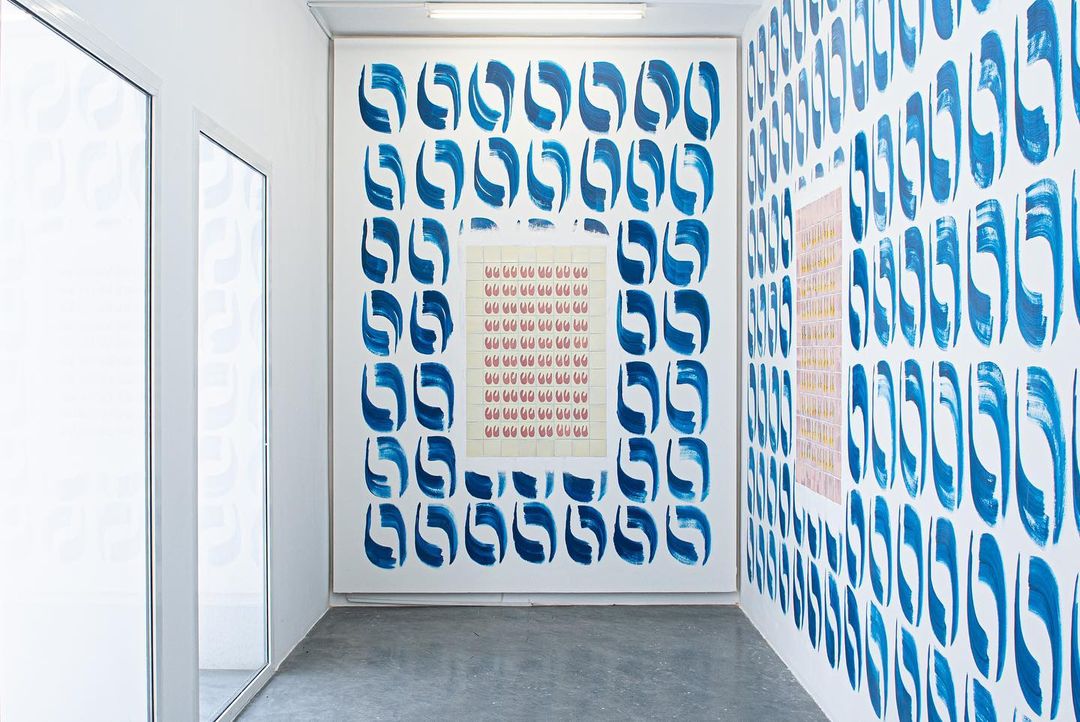
Echoing Chamla’s ceramic panels, Kacem thought of her interactions with urban space as a contemporary composition in a built-in environment of patterns.
The master artisan managed the entire process of constructing the clay tile, from shaping to drying it until it was dry enough to go in the oven. Engineering the shape involves consideration for changes that occur from heat in the kiln.
Kacem emphasizes the importance of gesture transfer, demystifying the form as the tiles are glazed by hand one at a time.
The collaboration was characterized by a fruitful exchange of ideas, movement, character and knowledge brought to the ceramic panels. The artisans she collaborated with had a great deal of knowledge of the artistic process and could bring that expertise in service of the idea.
The titles “Arches, Lunes, croix et points” serve as keys to read the abstract forms on the ceramics helping to communicate the context in which they were perceived and as codes of communication and identification of specific patterns between the artisans and the artist.
There is a sense of intendedness and even poetry in these compositions, as different hands have appropriated, repeated and interpreted them. The architecture of the space has been strongly amplified by color creating an atmosphere by altering the empirical experience of the viewer.
Jelliz & Gestes, is a sequel of an urban experience translating Sonia Kacem’s expressions and impressions into shapes and vibrations. The idea was to create a sense of energy and movement in space, drawing the viewer’s eye and creating a dynamic visual experience.
The use of pattern on pattern creates a complex image that requires both a sense of proximity for a detailed view and a step back for an overall perception. The public is thus confronted with different angles of interpretation and submerged by different scales of patterns and the intonations of colors.
Salma Kossemtini, Selma Feriani Gallery Tunis, May 2023




Fares Thabet – On a Blade of Grass
Curatorial
FARES THABET – ON A BLADE OF GRASS
Solo show — 13 December 2021 – 5 February 2022 — Selma Feriani Gallery, Sidi Bou Said
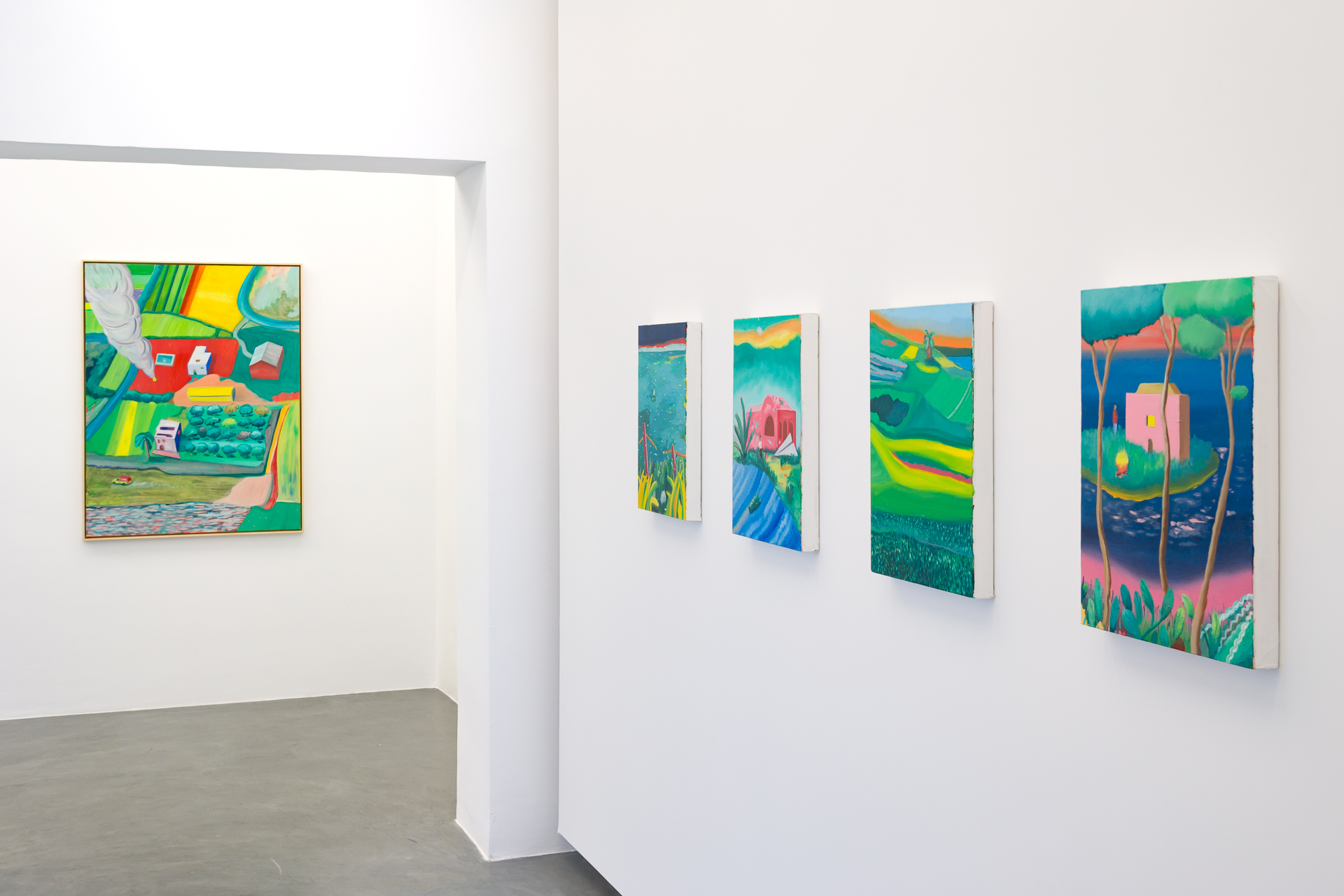
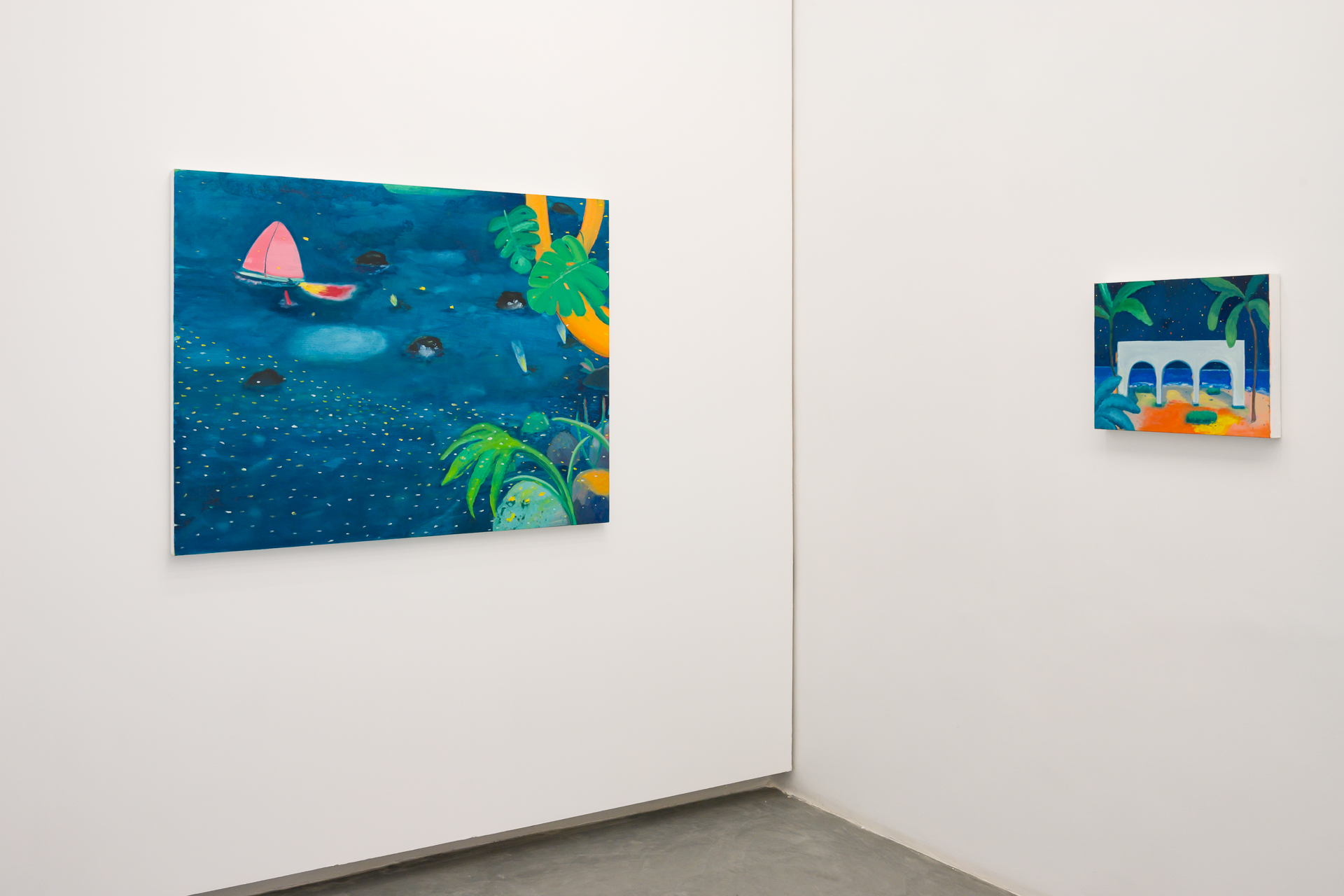
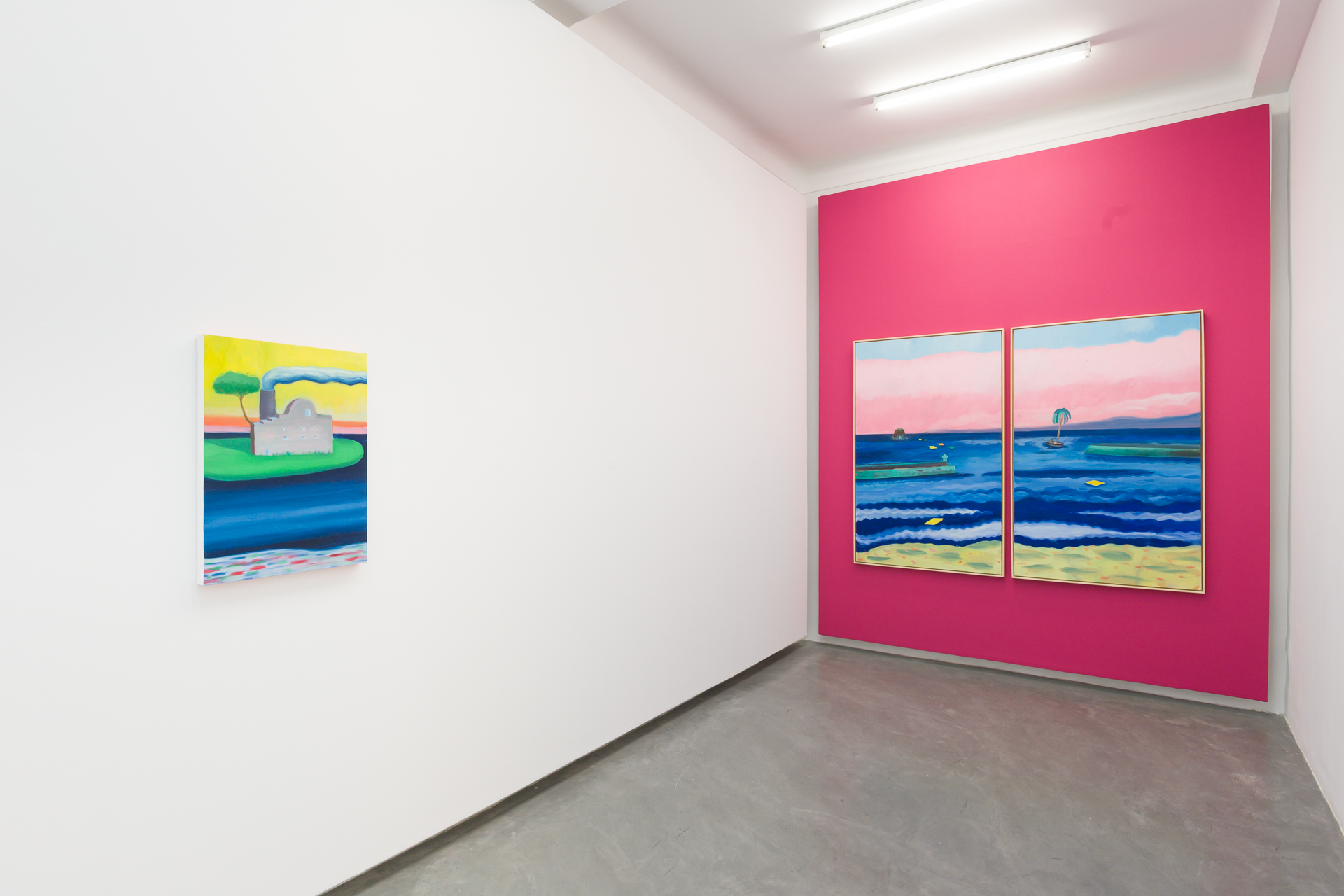
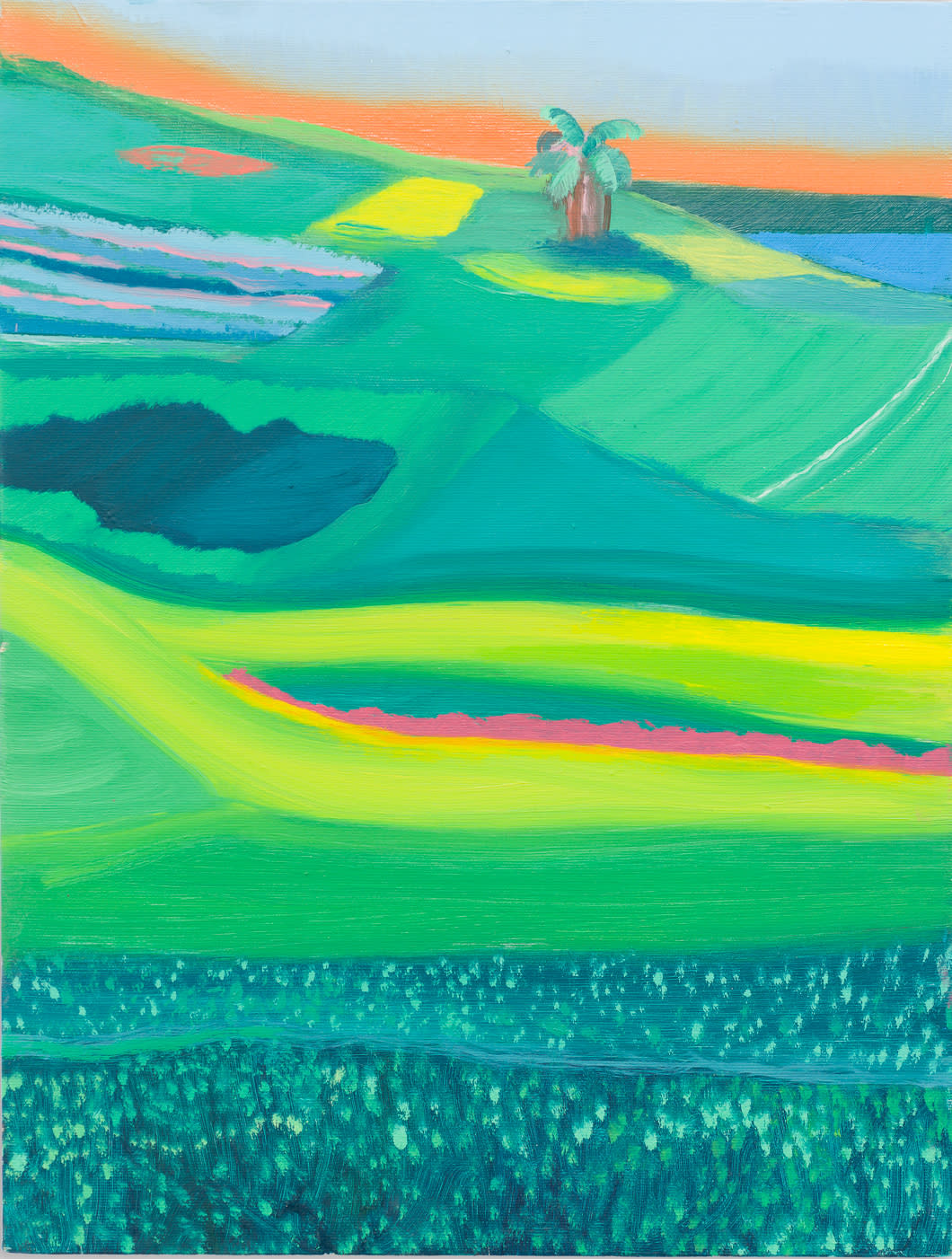
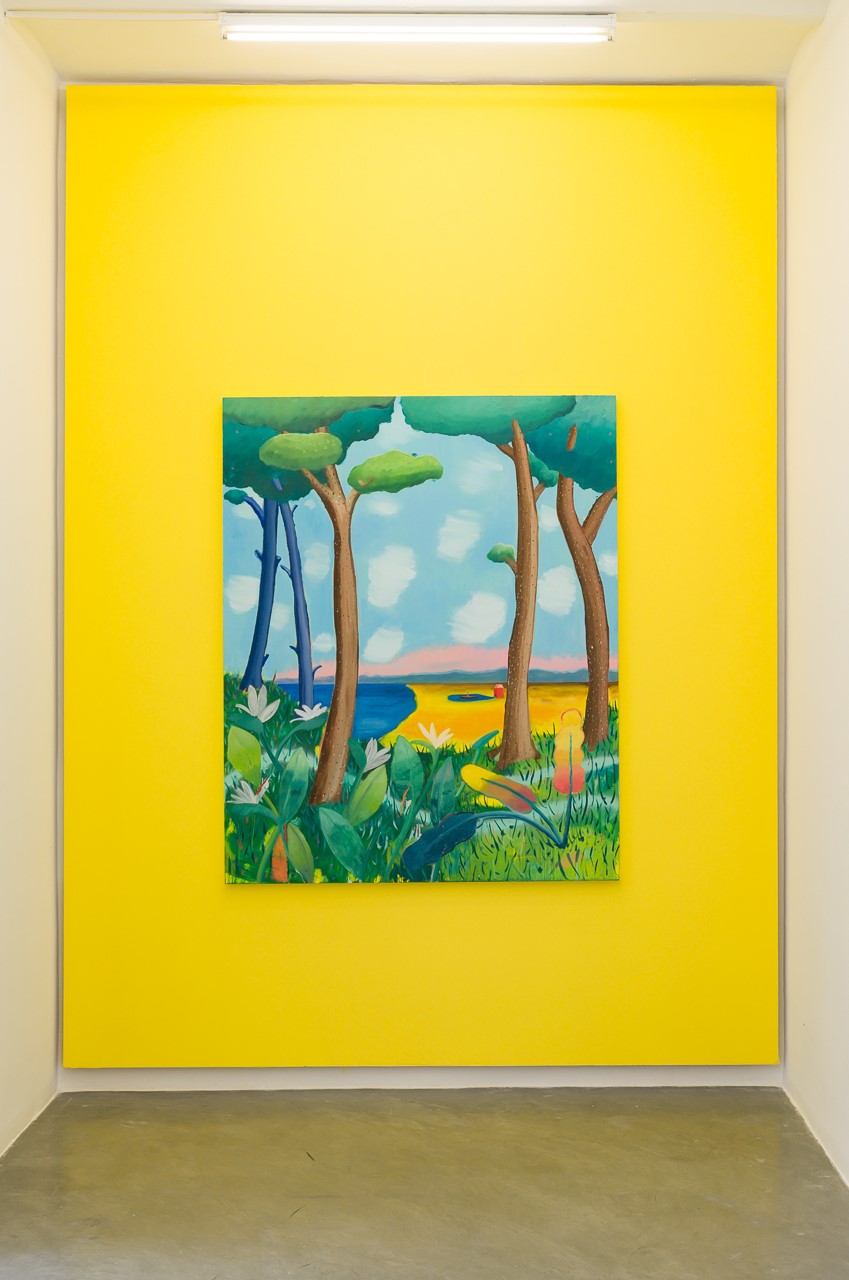
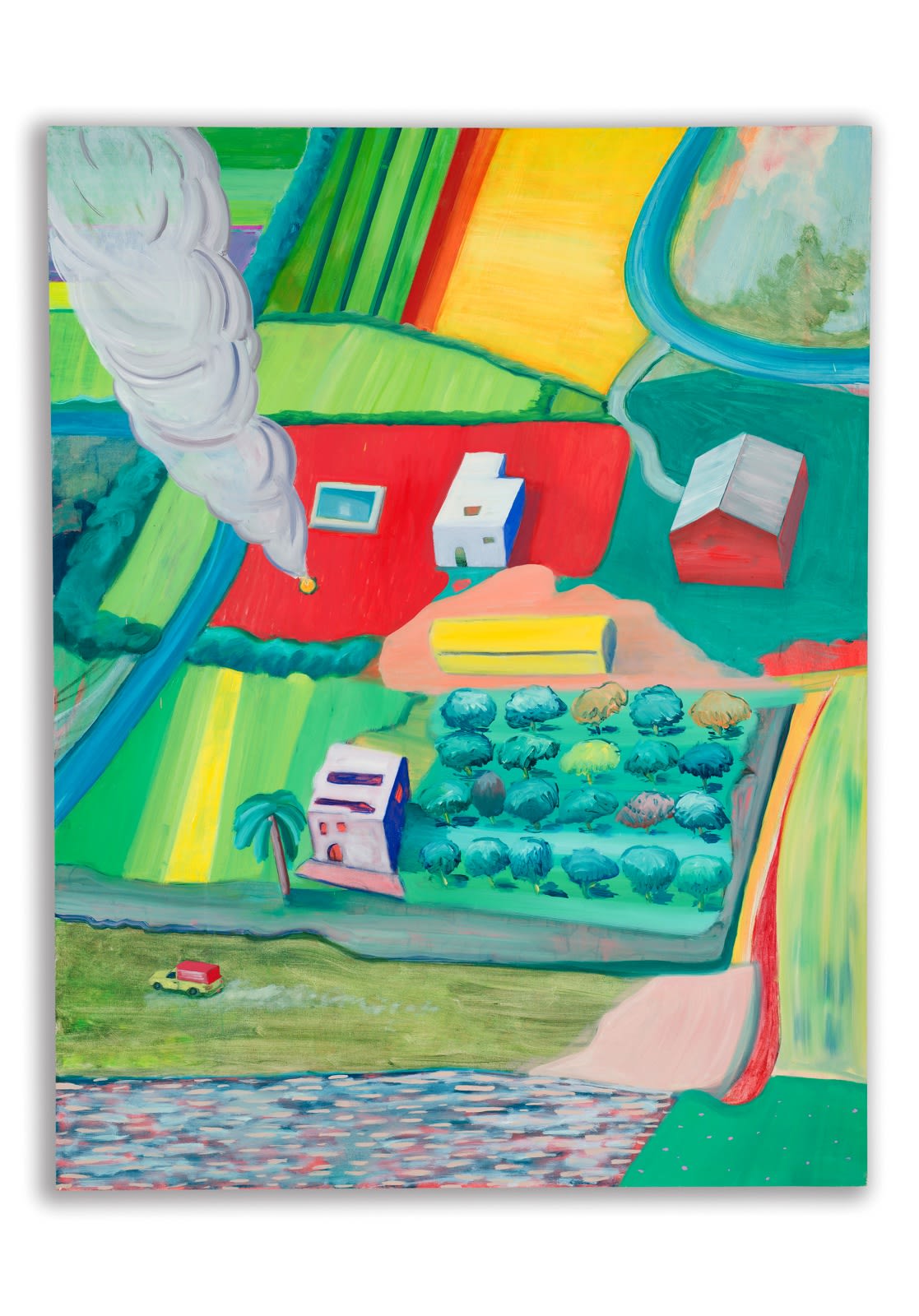
“Subtle nuances of a hue that progresses and spreads “[1] appear in the back- ground of his canvas, overlapped by a layer of colors that shape the appearance of the landscape sensed in Fares Thabet’s imagination. Semblances of forms emerge from his imagination, weathered materials lying at the threshold of his reality and his dreamscape. He sketches the outlines of his paintings in charcoal on the wall of his studio next to his blank canvas. He works his backgrounds first, studies his palette and looks for the vibration of his colors, one next to the other. Thabet places the locations of his flat surfaces often with strong luminous intensity and gradually adorns his paintings with details that mark his large land- scapes. His spaces evoke a familiarity and invite the audience to slip into his leafy world. He invokes miniatures that arise from Derek Walcott’s poems, from a light that stunned him on an early morning or from a stroll. As an extension of his reality, his paintings are conceived by brushstrokes soaked in paint, some dense and others less greasy. His touches of color define the limits of the surfaces, which occasionally blur, marking areas of impact or surface change. Each scene “develops and accentuates what is specifically precious in the things that give us daily pleasure”[2] , he treats painting as a purely sensory connection to the world he perceives. The colors like musical notes that he feels and that he does not necessarily manage to put into words but to perceive in form or vibration. “I paint for the sake of painting” he says.
The color works as an energetic detonation by its vibration and can still define a painting or his state of mind at the time of its conception.
Thabet bends in two to see, steps back, settles in his small terrace to paint. A landscape indoor or outdoor, is an open door to a pre-established experience that emerges from the material to the common world.
By tracing the fields, climbing the hills and stops at the seaside landscapes, the intra or extra-muros are scenes printed in his memory from his daily life or even postcards found in flea markets in downtown Tunis, “transformed into aesthetic substance”3. The color itself becomes matter and material of processing his daily life, working as a thread of narratives that he weaves between his paintings, with puzzled temporality; sometimes brightness of a pastel pink and other times darkness of an ultramarine blue. Thabet sought to escape the conceptual or politicized academism of the art schools he attended in Spain, in search of his own color, a slowness and a technique of his own. His return to Tunis, marked a turning point in his painting, he returned to seek an apprenticeship to follow a rhythm dictated to his artistic practice. “On a Blade of Grass” is the eulogy of the color, imagination and lucid dreams that arise from the world of Fares Thabet.
Salma Kossemtini, November 2021 Selma Feriani Gallery, Tunis
1. JHON DEWEY, translation coordinated by JEAN-PIERRE ,L’art comme experience,COMETTI, p84,2010
2. ibid , p42
3. ibid, p190